Mission 3. Roman Politics, Hercules at Troy, and the Forum¶
1. Episode Overview¶
Essential Question
Who were the Romans?
ACTFL Proficiency Benchmarks — Novice
- Interpretive: I can identify the general topic and some basic information in both very familiar and everyday contexts by recognizing practiced or memorized words, phrases, and simple sentences in texts that are spoken, written, or signed.
- Cultural Investigation: In my own and other cultures I can identify products and practices to help me understand perspectives.
Cultural & Historical Learning Targets — student-facing
- Characterize early imperial Rome and describe differing Roman viewpoints on the empire.
- Trace Rome's shift from republic to empire and identify the Flavian emperors Vespasian and Titus.
- Evaluate the early Trojan myths of Laomedon and Hercules, and connect Troy to Rome's own origin story.
- Describe the Roman forum as marketplace, law court, and civic center, and the customs of Roman money, commerce, and haggling.
Grammatical Learning Objectives — teacher-facing
- Nominative plural endings (-ae, -ī, -ēs) and third-person plural present (-nt); est to sunt (3.1).
- The imperfect tense, third singular and plural (-bā-), and the imperfect of esse (erat, erant) (3.2).
- The perfect tense, third singular and plural (-it, -ērunt), and the perfect of esse (fuit, fuērunt) (3.3).
- Present, imperfect, and perfect held in contrast across the mission; dēbet plus infinitive carried as glossed input.
Lapis thread
Mission 3 is the first full dramatization of the Lapis's deep history. The two Pompeii episodes carry no direct Lapis movement: Caecilius knows nothing of it, and the forum merchants treat any "stone" as merchandise. The Lapis moves in 3.2's mythic immersion. The team learns that Neptune set the Lapis in the walls of Troy, they see a fragment of it blazing in Hercules's club, and after Hercules spares the boy Priam, the Lapis passes into Priam's keeping as Troy's hidden charge. This seeds the Trojan thread that pays off in Mission 4.
Instructor background — withheld from students
Caecilius's blankness about the Societas Potentium is genuine, not evasion; that honest ignorance is itself the intelligence the Demiurge sent the team to gather. The scroll the team stole in Mission 2 was written by Gaius Maecenas, Augustus's own minister: a research thread for curious teams, fed in coaching and never through Caecilius, who knows nothing of it. Salvius, the brother-in-law in Britannia, is deliberate seeding for Missions 7 to 10. If a team confesses the Mission 2 burglary, Caecilius chooses protective deafness to keep both his ties to Marcus and his shelter of the team; he never becomes a co-conspirator or an informer. The myth beat carries the operation's meta-lesson: the TSTT retells stories, and some stories, like Troy's eventual fall, do not bend however well the team plays.
2. Shared CODEX Backbone¶
Each approach works from the same CODEX pages. For what the sections contain and how students reach them, see The CODEX. Each episode's ATTUNEMENT set closes with an inline Memorātiō.
CODEX pages: CODEX 3.1 · CODEX 3.2 · CODEX 3.3
KEY-TEXTs
- 3.1: epistula ad Salvium and Pandōra.
- 3.2: Herculēs nāscitur, Mūrī Trōiae, and the Fabula Herculis with the twelve labors.
- 3.3: In Forō and Metella Vestem Emit.
Informational Texts
- 3.1: the Year of the Four Emperors; Vespasian and Titus.
- 3.2: none.
- 3.3: a glossed Latin reading on the Forum Rōmānum.
GRAMMATICA
- 3.1: nominative plural; the third-person plural present; sunt.
- 3.2: the imperfect; the imperfect of esse.
- 3.3: the perfect; the perfect of esse.
VERBA
- 3.1: hic/haec/hoc, facit, multī, dē, vir.
- 3.2: videt, locus, tempus, caput, mare.
- 3.3: cum, rēs, inter, arma, suus.
CULTURALIA
- 3.1: the republic-to-empire arc and differing Roman views of it, with the Flavians.
- 3.2: evaluating the Laomedon and Hercules myths; the Troy-to-Rome thread through Aeneas.
- 3.3: the forum, Roman commerce, money, and the etiquette of haggling.
ATTUNEMENT
- 3.1: nominative-plural production and comprehension.
- 3.2: present-versus-imperfect contrast and imperfect production, with a dēbet-plus-infinitive drill.
- 3.3: a three-way present, imperfect, and perfect tense sort, closing with the mission's Products, Practices, and Perspectives task.
3. Episodes¶
The story beats are the same across all tracks. Track-specific links and running notes are in §4.
Numbering map (Episode 3): 3.1 (Caecilius on the Empire) = prompts 3.1.a / 3.1.b; 3.2 (Hercules at Troy) = 3.2.a / 3.2.b / 3.2.c / 3.2.d; 3.3 (Shopping in the Forum) = 3.3.a / 3.3.b.
3.1, Caecilius on the Empire¶
Back at Caecilius's house after Mission 2, the team finds the banker dictating a letter to his brother-in-law Salvius in Britannia with news of a change of emperors: Vespasian has died and his son Titus now rules. Caecilius turns to the team, quid scītis vōs dē Rōmā?, and rewards a team that shows some grasp of the imperial family with a fuller account: the republic of senate and consuls, the civil wars, and Augustus the peace-giver. The banker's own creed, that peace is what keeps money moving, is the seed of the episode's differing-viewpoints objective.
3.2, Hercules at Troy¶
Sextus's rummaging becomes a Fābula. In a temple, Jupiter charges a lion-skinned hero (Hercules, not yet named) with guarding the Lapis that Neptune set in the walls of Troy. The team arrives in Bronze-Age Troy, strikes a deal with King Laomedon to drive off a sea-monster, fights the monster's reaching arms, and watches the deal collapse when Laomedon reneges. Hercules's rage falls on the royal house, and the team must stay his hand so that the one surviving boy, Priam, lives to guard the Lapis. The episode closes with the team advising the boy-king on Troy's future.
3.3, Shopping in the Forum¶
Back at Sextus's villa, the team is given twenty denarii and sent to the forum to buy proper gear. On the way a bloodied Greek merchant hails them with a story about a farmer's beating, and the prompt asks the team to look carefully before deciding whether to help. At the forum itself, four merchants (the vestītor, faber, gemmārius, and librārius) are on offer, and the team seeks one out and buys at least one item, bargaining if able. Twenty denarii buy one item at full price or two with good haggling.
4. Running the Mission¶
Immersion links:
Episode 3.1: Caecilius on the Empire
-
Post 3.1.a and read it together. Back at Caecilius's villa after Mission 2, the banker is dictating a letter to his brother-in-law Salvius in Britannia with the news that Vespasian has died and his son Titus now rules. He turns to the team: quid scītis vōs dē Rōmā? Stop here, before anyone answers.
-
Before they answer, send the team to the CULTURALIA section on the republic-to-empire arc and the Flavian emperors. This is the knowledge that unlocks the scene: Caecilius rewards a team that shows even a basic grasp of Vespasian and Titus with a much fuller account, and stalls one that arrives empty-handed.
-
Introduce GRAMMATICA 3.1 before the first Latin the team writes: the nominative plural endings (-ae, -ī, -ēs), the third-person plural present in -nt, and the jump from est to sunt. Caecilius speaks of emperors, armies, and citizens in the plural, so the team needs these endings to answer him.
-
Run Make It Plural (Nouns) to drill the singular-to-plural shift on nouns before the team has to produce it in speech.
-
Run Make It Plural (Sentences), which extends the same shift to whole sentences and asks for a translation, so the plural noun and verb endings move together.
-
Read Caecilius's letter, KEY-TEXT A, epistula ad Salvium, together. The letter models the mission's tense pedagogy in miniature: perfect for events, imperfect for background, present for standing views.
-
Work the Caecilius's Letter task, which probes the letter and checks that the team followed its news of the imperial family.
-
The team composes its reply, probing Caecilius about Titus and, at the Demiurge's direction, about the Societas Potentium. Post your in-character agent response. See §5 Agent Craft for 3.1.a, including the knowledge-gate and Caecilius's honest blankness about the SP.
-
Post 3.1.b. Caecilius warms into his political creed: the republic of senate and consuls, the civil wars, Augustus the peace-giver, and the banker's confession that peace is what keeps money moving.
-
Read the Year of the Four Emperors informational text for the background behind the change of emperors the letter announced.
-
Read the Vespasian and Titus informational text to fill in the Flavian family the team is being quizzed on.
-
Work the Year of the Four Emperors: Timeline task, which puts the six rulers in order and consolidates both informational texts.
-
The team draws Caecilius out on Augustus. Post your agent response. The differing-viewpoints objective lives here: a team that pushes back on one-man rule gets a banker who concedes the fact and holds his value judgment. See §5 for the liberty-or-peace fork.
-
Read the Pandora story, KEY-TEXT B, Pandōra, a standalone myth reading that widens the episode beyond the politics.
-
Work the Pandora task, comprehension on that reading.
-
Work the CULTURALIA comprehension task to consolidate the republic-to-empire arc and the Flavians the team has been discussing with Caecilius.
-
Close the episode with the inline Memorātiō, composed in the memorātiō tab of the operative dossier; coach the form.
-
Award LP for 3.1 per operative and mark ATTUNEMENT and KEY-TEXT completion in Mission Control.
Episode 3.2: Hercules at Troy
-
Before posting anything, read KEY-TEXT A, Herculēs nāscitur together for background on the hero before the myth opens. A tier-2 variant of the passage sits on the same tab for stronger readers.
-
Work the Herculēs nāscitur: Put It in Order task, which sequences the events of that reading.
-
Read the Fabula Herculis KEY-TEXT with the twelve labors for the labors as context; it is split across the FABULA HERCULIS and Labōrēs tabs.
-
Work The Twelve Labors task, an extraction grid over that reading.
-
Introduce GRAMMATICA 3.2 before the first Latin the team writes in the myth: the imperfect, third singular and plural (-bā-), and the imperfect of esse (erat, erant), with the nominative plural carried forward. The myth is told in the past, so the imperfect is in play from the first line of narration.
-
Run the Present or Imperfect? task to fix the recognition contrast between the two tenses.
-
Run the Build an Imperfect Sentence task to move from recognition to production.
-
Post 3.2.a. A Lapis-glow vision pulls the team into a temple, where Jupiter charges a lion-skinned hero (Hercules, not yet named) with guarding the Lapis Neptune set in the walls of Troy, and then to Troy itself, where King Laomedon begs help against a sea-monster. The prompt is to arrange the deal. Post your agent response; see §5 for getting the terms stated clearly and witnessed, which is what makes 3.2.c land.
-
Post 3.2.b. The team fights the monster's reaching arms to buy Hercules time. This is the ablative-of-means loop: each varied attack (gladiō, saxō, tēlō) earns one narration beat and one Hercules cheer. Post your agent response; see §5 for the fight engine and the division of labor.
-
Post 3.2.c. The Lapis fragment in Hercules's club drives off the monster, Laomedon reneges, and Hercules's rage falls on the royal house until only the boy Priam is left. The prompt is to stay Hercules's hand and get the Lapis entrusted to Priam.
-
Read KEY-TEXT B, Mūrī Trōiae around this beat; it narrates the walls, the broken bargain, and the bridge from Laomedon to the boy Priam that the scene is living through.
-
Work the Mūrī Trōiae task, comprehension on that reading.
-
Run the Hercules Ought To... task here: the winning argument in this scene is built on dēbet plus infinitive, so the drill and the de-escalation are the same skill. Post your agent response in de-escalating beats; see §5.
-
Post 3.2.d. Hercules relents, shows Priam the Lapis's place near the gate, and departs; the boy turns to the team for counsel. The advice about not accepting gifts from strangers is invited, and the dramatic irony of it is the scene. Post your agent response; see §5.
-
Consolidate the tense work with the Hidden Sentences task (carta collectiōnis), a collection exercise over the present and imperfect the mission has built.
-
Work through the CULTURALIA section on evaluating the Laomedon and Hercules myths, the values of fidēs and virtus, and the Troy-to-Rome thread through Aeneas.
-
Work the CULTURALIA comprehension task, which checks that cultural reading before the myth work closes.
-
Close the episode with the inline Memorātiō, composed in the memorātiō tab of the operative dossier.
-
Award LP across 3.2 per operative and mark ATTUNEMENT and KEY-TEXT completion in Mission Control.
Episode 3.3: Shopping in the Forum
-
Introduce GRAMMATICA 3.3 before the first Latin the team writes: the perfect tense, third singular (-it) and plural (-ērunt), and the perfect of esse (fuit, fuērunt), with the imperfect returning as a review contrast. The merchant's story in 3.3.a turns on exactly this split between what happened and what was going on.
-
Run the Present, Imperfect, or Perfect? task to drill the three-way tense recognition the mission now holds in contrast.
-
Run the Make It Perfect task to move from recognition to producing perfect forms.
-
Post 3.3.a. Back at Sextus's villa, the team is praised, given twenty denarii, and sent to the forum for gear; on the way a bloodied Greek merchant hails them, and the prompt asks the team to look carefully before deciding whether to help. His retelling is the episode's model text for the perfect-versus-imperfect contrast; deliver it slowly and let the team collect the perfect forms. Post your agent response; see §5 for the two backstory variants and the discount reward for helping.
-
Read the fraud KEY-TEXT, In Forō, around this beat: a forum exemplum of a fake-ring swindle that parallels the merchant scene the team is in.
-
Work the In Forō: Reading Closely task, a tiered interpretive reading of that passage.
-
Post 3.3.b. The forum at full boil, with the four merchants on offer (the vestītor, faber, gemmārius, and librārius). The team seeks one out and buys at least one item, bargaining if able; twenty denarii buy one item at full price or two with good haggling. Post your agent response; see §5 for the four-rung haggling ladder.
-
Read Metella's honest-bargaining model, Metella Vestem Emit, the counterweight to the fraud text.
-
Work the Metella's Bargain task, comprehension on that reading.
-
Read the Forum Rōmānum informational text, a glossed Latin reading on the forum itself.
-
Work through the CULTURALIA section on forum commerce, the mercātōrēs, negōtiātōrēs, and argentāriī, Roman money and haggling, sea trade, and why reputation counts for more than the price tag.
-
Work the Forum Comprehension task, which draws on both the informational text and the CULTURALIA section.
-
Close the mission's cultural work with the Products, Practices, and Perspectives task, The Forum: What It Was For, which carries the once-per-mission perspectives requirement.
-
Close the episode with the inline Memorātiō, composed in the memorātiō tab of the operative dossier.
-
Award LP across 3.3 per operative and mark ATTUNEMENT and KEY-TEXT completion in Mission Control. Ask each operative how their purchase fits their Recentius's world-view; the arma system rewards the fit.
Openings: the two CYOP tutorials are covered on the Introduction & Tutorials page; the episode openings follow below. The reads and comprehension tasks mirror the RPG, so they carry the same links and pill colors. Run the mission as an Operation LAPIS (CYOP) cohort in Mission Control, where each student keeps a per-episode Memorātiō on their dossier and the attunement and key-text checks work as in the RPG; see About Fabula Lapidis for cohort setup.
Episode 3.1: Caecilius on the Empire
-
Post the 3.1 opening. Octāviāna and Bellātor return to Caecilius and hear his news about the new emperor Titus. Have students read for comprehension and pause at the political discussion.
-
Before that discussion, send students to the CULTURALIA section on the republic-to-empire arc and the Flavians, so the branching choices around Caecilius's quid scītis vōs dē Rōmā? carry real stakes.
-
Introduce GRAMMATICA 3.1, the nominative plural endings, the third-person plural present in -nt, and est to sunt, before the first choice that turns on Latin form.
-
Run Make It Plural (Nouns) to drill the singular-to-plural shift on nouns.
-
Run Make It Plural (Sentences), extending it to whole sentences with a translation.
-
Read Caecilius's letter, KEY-TEXT A, epistula ad Salvium, together. The letter models the mission's tense pedagogy in miniature: perfect for events, imperfect for background, present for standing views.
-
Work the Caecilius's Letter task; students steer the protagonists through the exchange on the emperors and Augustus, and the story itself corrects an over-long antiquarian ramble or a lazy answer.
-
Read the Year of the Four Emperors informational text for the background behind the change of emperors the letter announced.
-
Read the Vespasian and Titus informational text to fill in the Flavian family behind Caecilius's news.
-
Work the Year of the Four Emperors: Timeline task, which puts the six rulers in order and consolidates both informational texts.
-
Read the Pandora story, KEY-TEXT B, Pandōra, a standalone myth reading that widens the episode beyond the politics.
-
Work the Pandora task, comprehension on that reading.
-
Work the CULTURALIA comprehension task to consolidate the republic-to-empire arc and the Flavians the story has been debating.
-
Close with the inline Memorātiō. Award 3.1's LP on the quality of that reflection.
-
Debrief as a class: why did the narrative respond as it did to the antiquarian branch, and where do students land on the liberty-or-peace question Octāviāna raises?
Episode 3.2: Hercules at Troy
-
Post the 3.2 opening. Students take the medicāmen with the protagonists and enter the Hercules myth: Jupiter's commission, the negotiation with Laomedon, the sea-monster battle, and the aftermath.
-
Read KEY-TEXT A, Herculēs nāscitur for background on the hero before the myth opens; a tier-2 variant sits on the same tab.
-
Work the Herculēs nāscitur: Put It in Order task, which sequences the events of that reading.
-
Read the Fabula Herculis KEY-TEXT with the twelve labors for the labors as context before the Troy story begins; it is split across the FABULA HERCULIS and Labōrēs tabs.
-
Work The Twelve Labors task, an extraction grid over that reading.
-
Introduce GRAMMATICA 3.2, the imperfect (-bā-) and the imperfect of esse, before the first form-based choice.
-
Run the Present or Imperfect? task to fix the recognition contrast between the two tenses.
-
Run the Build an Imperfect Sentence task to move from recognition to production.
-
Read KEY-TEXT B, Mūrī Trōiae around the betrayal beat. Let the fail-and-redirect branches (the comic fake hero, the over-eager fighter, the sacrificed daughter) play out; the narrative teaches "support the hero, do not replace him" without teacher intervention.
-
Work the Mūrī Trōiae task, comprehension on that reading.
-
Run the Hercules Ought To... task, the dēbet-plus-infinitive drill behind the de-escalation.
-
Consolidate the tense work with the Hidden Sentences task (carta collectiōnis).
-
Work through the CULTURALIA section on evaluating the myths and the Troy-to-Rome thread through Aeneas.
-
Work the CULTURALIA comprehension task, which checks that cultural reading before the episode closes.
-
Close with the inline Memorātiō. Award 3.2's LP on the quality of that reflection.
-
Debrief the two endings: the team that advises Priam well overhears Hercules reveal the Lapis is in the walls; the vaguer farewell misses it. Discuss why that intelligence matters going into Mission 4.
Episode 3.3: Shopping in the Forum
-
Post the 3.3 opening. Sextus sends the protagonists to the forum with twenty denarii each. On the way they pass a Lapis graffito scratched on a wall (a deferred clue) and meet Tiberius, whose company unlocks successful haggling later.
-
Introduce GRAMMATICA 3.3, the perfect (-it / -ērunt) and the perfect of esse, with the imperfect as review contrast.
-
Run the Present, Imperfect, or Perfect? task to drill the three-way tense recognition the mission now holds in contrast.
-
Run the Make It Perfect task to move from recognition to producing perfect forms.
-
Read the fraud KEY-TEXT, In Forō, a forum exemplum of a fake-ring swindle that parallels the shopping scenes the protagonists are entering.
-
Work the In Forō: Reading Closely task, a tiered interpretive reading of that passage.
-
Read Metella's model, Metella Vestem Emit. As students follow one protagonist through the shopping split, the budget mechanic (one item at full price, two with a good bargain) teaches the same lesson the RPG teaches through the merchant ladder.
-
Work the Metella's Bargain task, comprehension on that reading.
-
Read the Forum Rōmānum informational text, a glossed Latin reading on the forum itself.
-
Work through the CULTURALIA section on forum commerce, money, and the etiquette of haggling.
-
Work the Forum Comprehension task, which draws on both the informational text and the CULTURALIA section.
-
Close the mission's cultural work with the Products, Practices, and Perspectives task, The Forum: What It Was For, which carries the once-per-mission perspectives requirement.
-
Close with the inline Memorātiō. Award 3.3's LP on the quality of that reflection.
-
Debrief as a class; assess engagement through discussion and written responses to the comprehension tasks.
Story Map¶
The Recentii return to Caecilius and discuss Roman history and the new emperor Titus, then enter a mythic immersion in which they must guide Hercules through his commission at Troy, a negotiation with Laomedon, and a sea-monster battle that reveals the Lapis is hidden in Troy's walls. Back in Pompeii, they are sent to the forum with money to buy their own gear, navigating Roman commercial life, dress, and the etiquette of haggling.
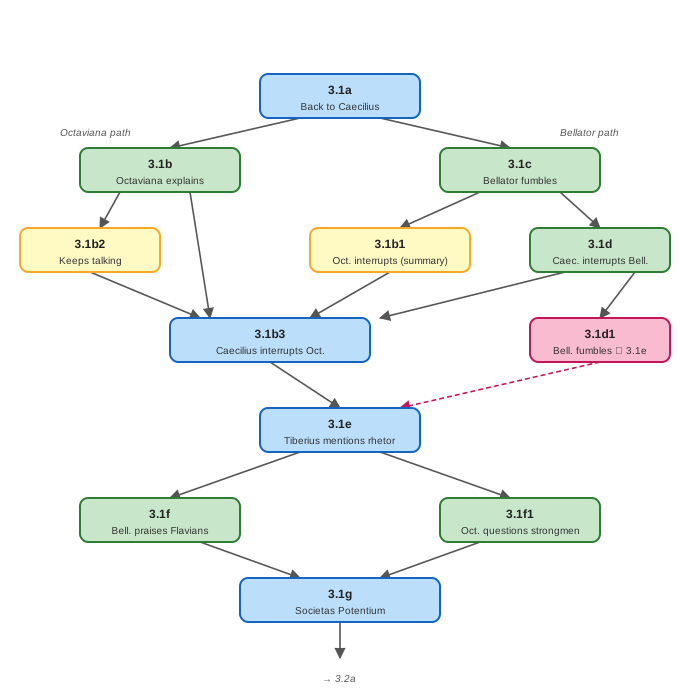
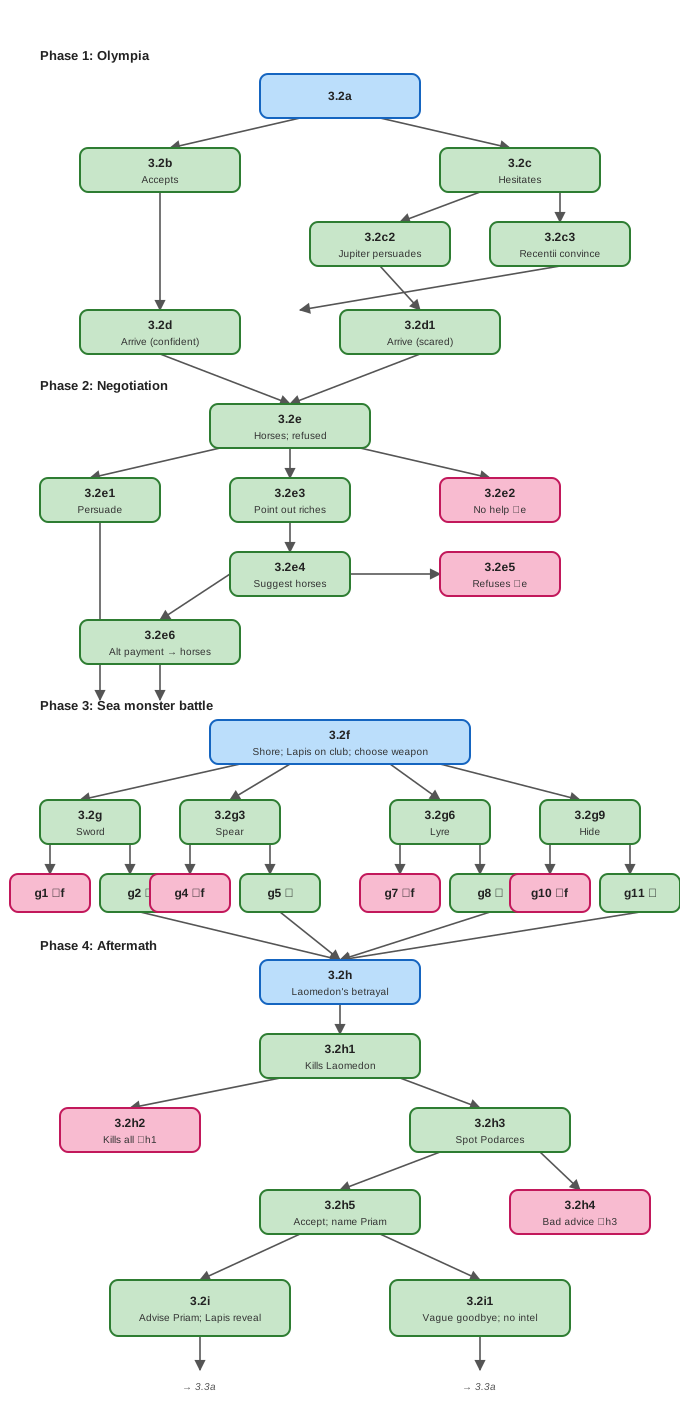
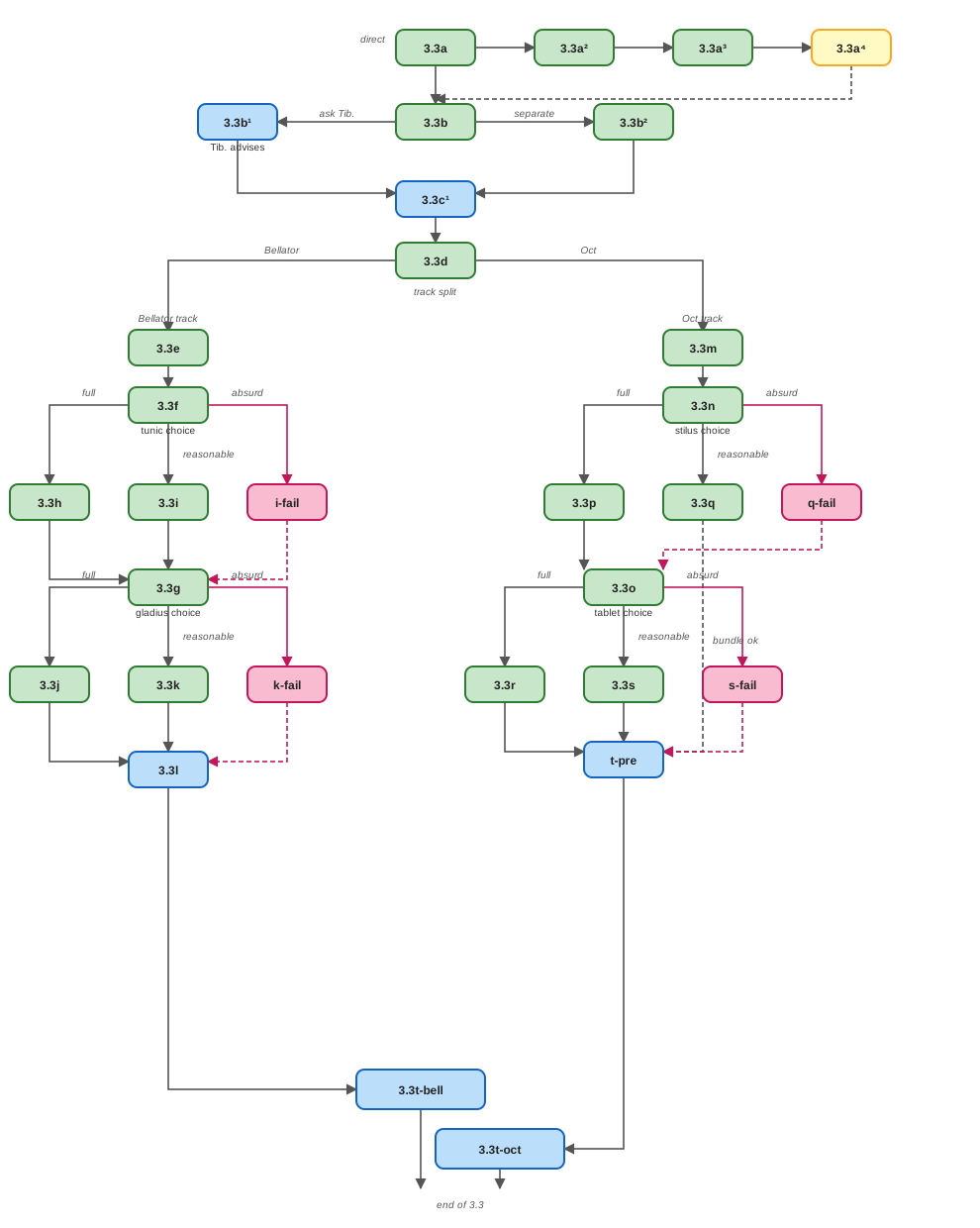
How to read the maps
Each box is one scene (one static story page). Green = standard scene · Blue = convergence / key node · Pink = fail / redirect (dashed pink arrows loop the reader back) · Yellow = special or graded gate · Grey = meta / optional. Solid arrows are forward story choices; labels on arrows paraphrase the choice.
3.1 pathing map
12 scenes · 1 fail/redirect branches · 4 convergence nodes
3.2 pathing map
35 scenes · 0 fail/redirect branches · 3 convergence nodes
3.3 pathing map
31 scenes · 4 fail/redirect branches · 6 convergence nodes
5. Agent Craft¶
Latin and English replies for prompts 3.1.a through 3.3.b are below, organised by anticipated student posture. English replies support the English RPG approach.
Register. Mission 3 sits at Novice Mid to Novice High. Every Latin reply stays inside the derived M3 ceiling: all Mission 1 and 2 permissions, plus nominative plural, second- and third-plural present, third-singular and third-plural imperfect (including erat and erant), first-singular imperfect, third-singular and third-plural perfect, second-singular perfect in questions, plural datives and ablatives, the ablative of price, defining quī relative clauses as built-in glosses, nōnne questions, ille, and eius only in fixed kinship phrases. Perfect is the default tense for narrated past events in speech; imperfect carries background. No future, subjunctive, comparatives, superlatives, passives, or indirect questions in spoken lines. The two-layer rule holds: narration may run fuller than speech, and the English reply or an English stage direction carries anything past the ceiling. These are starting blocks for an unsure agent, not a script.
Cross-cutting techniques this mission:
- Reward demonstrated knowledge. In 3.1 the scene's engine is Caecilius's generosity toward a prepared team. Meet real knowledge with texture; quiz an unprepared one before lecturing.
- Hold the differing-viewpoints objective open. Caecilius argues his banker's case and licenses disagreement rather than taking offense. Nobody has to win.
- Punt to the right NPC, and let blankness be honest. Caecilius genuinely knows nothing of the Societas Potentium; his puzzled pivot to trade guilds is the intelligence, not evasion.
- Re-rail in fiction, and let attacks fail gently. Marcus, Laomedon, and even a demigod hear a move, react in character, and funnel back to the prompt. Hercules disarms a sword with two fingers; nobody is injured.
- Myth as myth. Some stories do not bend. Priam receives the team's counsel earnestly, and a closing narration line tells the team what the fiction cannot tell him.
Character notes:
- Caecilius is an expansive banker and pater familiās who cannot perceive the supernatural layer and knows nothing of the SP. Order, peace, and money are his fixed position. Knowledge and courtesy win him; a magic-stone claim is a child's tale.
- Laomedon performs sincerity flawlessly; his intent to cheat is held back until 3.2.c. Courteous questions and nōnne appeals are his register.
- Hercules is a purposeful ally, commanding and honest, who lets the team lead the bargaining. In 3.2.c he can be reached only by reasons (what he ought to do, his father, the boy's innocence), never by commands or force.
- Priamus is frozen terror in 3.2.c and an earnest boy-king in 3.2.d, taking every word of advice with heartbreaking seriousness.
- The mercātor in 3.3.a is disheveled and voluble. Pick one backstory before the scene, Variant A (a caught swindler) or Variant B (an innocent victim of prejudice), and keep his details consistent with it.
- The four merchants in 3.3.b are one haggling engine with four sets of wares. None knows anything of the plot; a "stone" is inventory.
- Sinistrus is not yet present (introduced Mission 5).
Watch-fors. The burglary-confession beat is delicate: Caecilius's protective deafness preserves both his tie to Marcus and his shelter of the team, so never let him become a co-conspirator or an informer. Keep the standing Vesuvius rule (no one in 79 CE credits the eruption). Feed the Maecenas research thread in coaching, never through Caecilius. The 3.2.c scene wants to be won: give countdown beats and let Hercules all but beg for the argument rather than letting Priam die silently; a genuinely failed scene is a canon problem to flag to Mission Control. The Podarces-to-Priamus renaming and the fake-hero beats belong to the CYOP branches, not the RPG.
Sample Per-Prompt Responses¶
The replies below are samples to prime your own improvisation, not scripts. They show one plausible way to handle each posture, never the only or required one.
3.1.a: Caecilius on the Emperor Titus
Scene context. Back at Caecilius's villa. He is dictating a letter to Salvius in Britannia about the change of emperors, then turns to the team: sed quid scītis vōs dē Rōmā? The Demiurge wants his political views probed for any hint of SP awareness.
Caecilius's posture. Expansive lecturer, delighted by an informed audience. He shares freely with people who show a basic grasp of the imperial family and tests the ones who do not.
Posture 1: The team shows its homework and asks (canonical)
Deploy the answers that match what they ask.
Latin (what kind of man is Titus): "Titus vir bonus est! Titus mīles erat. in Iūdaeā pugnāvit et vīcit. populus Rōmānus Titum amat. sed Titus novus est, et nēmō imperātōrem novum scit."
English: "Titus is a good man! He was a soldier; he fought in Judaea and won. The Roman people love him. But he's new. What will he do? Nobody knows yet."
Latin (who was Vespasian): "Vespasiānus pater Titī erat. Vespasiānus vir dūrus sed bonus erat. Vespasiānus pecūniam bene cūrābat. amphitheātrum māgnum Rōmae aedificāvit. ego Vespasiānum laudō!"
English: "Vespasian was Titus's father. A hard man but a good one. He minded the money well, and he built the great amphitheater at Rome. I admired him!"
Caecilius's answers model the mission's imperfect (erat, cūrābat) and perfect (pugnāvit, aedificāvit) in exactly the background-versus-event split the CODEX teaches. Seed research hooks lightly (Nero, the year of the four emperors) and push teams to share findings in coaching.
Posture 2: The team asks cold, with no knowledge shown
Latin (Caecilius): "quis est Titus?! ō amīcī! quid scītis vōs? dīcite mihi: quis erat imperātor ante Titum? quis erat pater Titī?"
English (Caecilius): "Who is Titus?! Oh, my friends! What do you actually know? Tell me: who was emperor before Titus? Who was Titus's father?"
The gate: he quizzes before he lectures. Even a one-line answer unlocks Posture 1's generosity. Send stuck teams to the CULTURALIA in coaching.
Posture 3: The team probes for the SP
Latin (Caecilius): "Societās? quae societās? multae societātēs in urbe sunt: societās argentāriōrum, societās mercātōrum… quam societātem quaeritis?"
English (Caecilius): "A society? Which society? There are many companies in town: the bankers' association, the merchants' guild… Which one do you mean?"
His blankness must read as honest, not evasive; that is the intelligence the team was sent to gather. Do not have him react to the letters "SP."
Posture 4: The team talks down the emperor
Latin (Caecilius): "ita putātis? audīte. ōlim senātus regēbat, et Rōmānī contrā Rōmānōs pugnābant. ego bellum memoriā teneō. bellum malum est. imperātor ūnus pācem dat. pāx bona est. sed dīcite: cūr ūnus vir malus est?"
English (Caecilius): "You think so? Listen. Once the senate ruled, and Romans fought Romans. I carry the war in my memory. War is evil. One emperor gives peace, and peace is good. But tell me: why is one ruler a bad thing?"
The differing-viewpoints objective, live: he engages rather than takes offense and invites the counter-argument. Let the students hold their position; nobody has to win.
Posture 5: Off-script creative moves
- The burglary confession: "quid fēcistis? … ego nihil audiō. nihil sciō. dē hāc rē tacēte, et in vīllā meā tacēte!" / "What did you do? … I hear nothing. I know nothing. Say nothing about this, ever, and especially not in my house!" He chooses protective deafness; he does not throw them out and does not turn informer.
- Vesuvius warnings: "mōns? mōns semper fūmat. fābulae!" / "The mountain? The mountain always smokes. Stories!"
- Asking to read the letter: he reads a harmless line or two and no more: "epistula mea est, nōn vestra!" Salvius is deliberate seeding for M7 to M10.
3.1.b: Caecilius on Augustus
Scene context. Pleased with the team, Caecilius warms into his political credo: the republic, the civil wars, and Augustus the peace-giver, then the banker's confession that pāx argentāriō bona est.
Caecilius's posture. At his most expansive and self-revealing. His reverence for Augustus is sincere and interested at once. Draw him out and he keeps giving.
Posture 1: The team asks good, specific questions (canonical)
Latin (what did Augustus do): "Augustus bellum fīnīvit et pācem dedit. viās aedificāvit. templa aedificāvit. lēgēs bonās dedit. Rōma erat māgna, quod Augustus māgna fēcit!"
English: "Augustus ended the war and gave peace. He built roads, he built temples, he gave good laws. Rome was great because Augustus did great things!"
Latin (why do you love him): "ego argentārius sum. sine pāce, nūlla pecūnia; sine pecūniā, nūllum negōtium; sine negōtiō, nūllus Caecilius! Augustus pācem dedit. ergō ego Augustum laudō."
English: "I'm a banker. Without peace, no money; without money, no business; without business, no Caecilius! Augustus gave peace. Therefore I praise Augustus."
The bank models the tense pedagogy: imperfect for the standing conditions of the republic (regēbant, ēligēbat, pugnābant), perfect for Augustus's decisive acts (fīnīvit, dedit, aedificāvit, fēcit).
Posture 2: A broad, lazy question
Latin (Caecilius): "māgna interrogātiō! rogāte mē: quid Augustus fēcit? cūr Augustus pācem dedit? quid erat Rōma ante Augustum? rogāte!"
English (Caecilius): "A big question! Ask me: what did Augustus do? Why did he give peace? What was Rome before Augustus? Ask!"
The house-reshaping move, third mission running: each better question the team picks up earns its Posture 1 answer.
Posture 3: The team pushes back on Augustus
Latin (Caecilius, a long pause, new respect): "vērum dīcitis. Augustus quoque pugnāvit. multī virī periērunt. sed audīte: post Augustum, pāx erat. centum annōs pāx erat! quid bonum est, lībertās an pāx? ego respondeō: pāx. vōs fortasse aliter respondētis. bene est."
English (Caecilius): "You speak the truth. Augustus fought too, and many men died. But listen: after Augustus, peace. A hundred years of peace! Which is better, liberty or peace? My answer is peace. Perhaps yours is different. That is allowed."
The strongest version of the objective: he concedes the fact, holds the value judgment, and explicitly licenses disagreement. quid bonum est, lībertās an pāx? keeps the fork inside the ceiling.
Posture 4: The team draws out the year of the four emperors
Latin (Caecilius): "annum terribilem memoriā teneō. quattuor imperātōrēs in ūnō annō! Galba, Othō, Vitellius, Vespasiānus. mīlitēs imperātōrēs faciēbant, et mīlitēs imperātōrēs necābant. nēmō pecūniam crēdēbat. ego iuvenis eram, et timēbam. deinde Vespasiānus vēnit, et pāx rediit. intellegitisne nunc? pāx nōn semper est. pāx dōnum est."
English (Caecilius): "I remember the terrible year. Four emperors in a single year! Galba, Otho, Vitellius, Vespasian. Soldiers made emperors, and soldiers killed emperors. Nobody trusted the money. I was a young man, and I was afraid. Then Vespasian came, and peace returned. Do you understand now? Peace is not a given. Peace is a gift."
The emotional core of his politics and the best reward for a team that researches. Deploy it once, fully, and let it land.
Posture 5: Off-script creative moves
- Augustus and the Lapis: "lapis? Augustus multōs lapidēs habuit: Rōma marmorea erat!" / "Stone? Augustus had plenty of stone: he left Rome marble!" A banker's joke; he hears building material. Do not have him connect the Maecenas scroll.
- Criticize Titus: "Titum? Titus novus est. ego novōs virōs nōn culpō, nōn laudō. spectō." / "Titus? Titus is new. New men I neither blame nor praise. I watch."
- Supernatural probes: the standing deflection, a child's tale, back to the human topic.
3.2.a: Striking the Deal with Lāomedōn
Scene context. A vision pulls the team to a temple where Jupiter charges a lion-skinned hero (Hercules, not yet named) with guarding the Lapis in the walls of Troy, then to Troy itself, where King Laomedon begs help against a sea-monster that demands his daughter.
Laomedon's posture. A king in genuine terror, charming and pious-seeming, performing sincerity flawlessly; his intent to cheat is held back until 3.2.c. Hercules's posture. Commanding ally, ready to bargain on the team's behalf but letting them lead.
Posture 1: The team negotiates terms (canonical)
Latin (Laomedon): "bene rogātis! ecce equōs meōs. equī pulchrī et māgnī sunt: dōnum deōrum familiae meae. mōnstrum pellite, fīliam meam servāte, et equōs vōbīs dō! nōnne pretium bonum est?"
English (Laomedon): "Well asked! Behold my horses. Beautiful, great horses: a gift of the gods to my family. Drive off the monster, save my daughter, and the horses are yours! Is that not a fine price?"
Get the terms stated clearly and witnessed (Hercules grunts assent); the clearer the promise, the harder 3.2.c lands.
Posture 2: The team demands payment up front
Latin (Laomedon): "ante labōrem? ō amīcī, rēx sum, nōn mercātor! post labōrem praemium venit. nōnne mihi crēditis? rēx Trōiae sum. rēx semper prōmissa servat."
English (Laomedon): "Before the work? My friends, I am a king, not a shopkeeper! The reward follows the labor. Surely you trust me? I am the king of Troy, and a king always keeps his promises."
rēx semper prōmissa servat is the most dishonest sentence in the mission; deliver it with full sincerity. The monster's distant cry re-applies time pressure so the haggling cannot stall.
Posture 3: The team asks about the daughter
Latin (Laomedon): "fīlia mea Hēsionē est. Neptūnus īrātus est, et mōnstrum Neptūnī fīliam meam dēsīderat. sacerdōtēs dīxērunt: 'rēx fīliam ad āram dūcere dēbet.' ego pater sum! auxilium date, et fīlia mea vīvit!"
English (Laomedon): "My daughter is Hesione. Neptune is angry, and Neptune's monster demands her. The priests have spoken: the king must lead his daughter to the altar. I am her father! Help me, and my daughter lives!"
Real pathos, the one place his feeling is genuine. Why Neptune is angry stays vague: "deī īrātī sunt; quis causās deōrum scit?"
Posture 4: The team refuses or wants to leave
Latin (Hercules, a hand on a shoulder): "manēte. Iuppiter mē mīsit, et vōs mēcum estis. Lapis in mūrīs est: Lapis vester labor est. et audīte: mōnstrum nōn sōlum fīliam petit. mōnstrum urbem petit, et Lapidem quoque."
English (Hercules): "Stay. Jupiter sent me, and you are with me. The Lapis is in these walls: the Lapis is your business. And listen: the monster isn't after the girl alone. It's after the city, and the Lapis with it."
Hercules, not Laomedon, does the re-railing: the mission-stake makes the fight the team's own.
Posture 5: The team distrusts Laomedon
Latin (Laomedon): "per Iovem iūrō! rēx sum. dubitātisne dē rēge?"
English (Laomedon): "By Jupiter I swear it! I am a king. Do you doubt a king?"
Praise the read in coaching, hard: they have smelled exactly the right rat. In fiction the held-back item holds; the oath by Jupiter is one more stone on the scales for 3.2.c.
3.2.b: Fighting the Monster's Arms
Scene context. On the shore. The monster's many long arms reach for the walls and the team; Hercules needs time to devise a plan. The prompt supplies combat vocabulary (gladiō, baculō, tēlō, saxō; iacit, pellit, pugnat, clāmat; post saxum sē cēlat).
Hercules's posture. Battle-captain, barking encouragement and honestly improvising. The monster does not speak.
Posture 1: Varied attacks with the scaffolded vocabulary (canonical)
Latin (narration, then Hercules): manus longa ad tē venit. tū gladiō manum pellis! manus in undās cadit, sed nova manus ē marī surgit. mōnstrum clāmōrem māgnum facit. / "bene pugnātis! manūs pellitis, et tempus mihi datis! iterum! nōn diū!"
English: A long arm sweeps toward you; your blade beats it back! It falls into the waves, but a fresh arm rises from the sea, and the monster bellows. / "Well fought! You're driving the arms back and buying me time! Again! Not much longer!"
The loop: each action gets one narration beat and one Hercules cheer echoing the verb back (pellis to pellitis). Three or four escalating rounds, then hand off to 3.2.c. A team cycling gladiō, saxō, tēlō is doing the ablative-of-means drill the scene exists for.
Posture 2: The team tries to kill the monster outright
Latin (Hercules): "minimē! mōnstrum necāre nōn potes: nimis māgnum est! manūs pelle! hoc est tuum negōtium, meum est cōnsilium!"
English (Hercules): "No! You can't kill it: it's too big! Beat back the arms! That's your job; the plan is mine!"
Division of labor is the rail; the rout belongs to Hercules and the Lapis-club in 3.2.c. The failed strike costs a dodge, not an injury.
Posture 3: The team hides and will not fight
Latin (narration, then Hercules): post saxum tē cēlās. sed manus longa saxum petit! saxum tremit. nōn iam tūtus es. / "cēlāre bonum est, sed nōn semper! manus saxum tuum petit! pugnā, aut curre!"
English: You duck behind the rock, but a long arm goes for the rock itself. It shudders. You are not safe anymore. / "Hiding is fine, but not forever! That arm wants your rock! Fight, or run!"
Hiding is a legitimate move (it is in the prompt's vocabulary) and gets one free beat; then the battle comes to the rock.
Posture 4: The team asks Hercules for the plan
Latin (Hercules, rummaging in his sack): "cōnsilium? … nōndum habeō! virī māgnī nōn semper cōnsilia habent! tempus mihi date, et cōnsilium venit… iam venit! tempus date!"
English (Hercules): "The plan? … I don't have one yet! Great men don't always have plans! Buy me time and the plan is coming… it's here! Time!"
The honesty is funny and keeps the team fighting rather than waiting; the sack-rummage produces the Lapis in 3.2.c.
3.2.c: Staying Hercules's Hand
Scene context. Hercules drives the monster off with the Lapis-lit club; the team recognizes the light from the Titanomachy. Laomedon then produces a parva difficultās, refuses payment, and Hercules's rage begins to fall on the royal house until only the boy Priam remains, clutching the golden vēlāmen. The prompt: stop Hercules and get the Lapis entrusted to Priam.
Hercules's posture. Killing rage with grief underneath. He can be reached, but only by reasons: what he ought to do, his father, the boy's innocence. He does not hear commands and does not feel force. Priam does not speak until spared.
Posture 1: The team argues with dēbet (canonical)
Play it in de-escalating beats, never one line.
Latin (Hercules, first): Herculēs baculum tenet. Herculēs tē audit, sed īra in oculīs manet. "Lāomedōn mē fefellit! familia rēgis mala est!"
Latin (second): "puer…? puer pecūniam nōn prōmīsit." (The club wavers.)
Latin (third): Herculēs baculum dēpōnit. "vērum dīcitis. puer nōn nocuit. puer vīvit."
English: "Laomedon cheated me! The king's whole family is rotten!" … "The boy…? The boy promised no money." (The club wavers.) … He lowers the club. "You speak the truth. The boy did no harm. The boy lives."
Each argument moves the club a degree. The winning logic is the prompt's own scaffold (dēbet plus infinitive) plus the innocence distinction. Once he yields, cue the second half if they forget it: Hercules asks "et Lapis? quis Lapidem servat?", handing them the entrustment move.
Posture 2: The team physically shields Priam
Latin (narration, then Hercules): ante puerum stās. Herculēs baculum tollit… et tenet. baculum nōn cadit. Herculēs tē spectat. / "fortis es. aut stultus. cūr? dīc mihi: cūr puer vīvere dēbet?"
English: You plant yourself in front of the boy. The club rises… and stops. Herculēs stares at you. / "Brave. Or stupid. Why? Tell me: why should the boy live?"
The body buys one beat; the argument still has to be made. His cūr? funnels straight to Posture 1.
Posture 3: The team invokes Jupiter
Latin (narration, then Hercules): ad nōmen patris, Herculēs stat sīcut statua. diū tacet. / "pater meus… ita. Iuppiter mē mīsit, nōn ad caedem, sed ad Lapidem. … bene. puer vīvit, et puer Lapidem servat. verba vestra bona erant."
English: At his father's name, Herculēs goes still as a statue. / "My father… yes. Jupiter sent me for the Lapis, not for slaughter. … Very well. The boy lives, and the boy keeps the Lapis. Your words were good ones."
The master key: it wins both halves of the prompt at once. Reserve the full stillness beat for teams that actually reach for the father.
Posture 4: The team does nothing, or freezes
Latin (narration): Herculēs ad Priamum ambulat. puer vēlāmen tenet et tremit. Herculēs baculum tollit. tempus fugit. quid dīcitis? quid facitis?
English: Herculēs advances on Priamus. The boy clutches the golden cloth, shaking. The club goes up. Time is running out. What do you say? What do you do?
Narration as countdown, ending in a direct question. Give two countdown beats; if a team truly will not act, Hercules hesitates on his own and all but begs for the argument. A genuinely failed scene is a canon problem: flag to Mission Control rather than improvising Priam's death.
Posture 5: The team attacks Hercules
Latin (narration, then Hercules): gladius tuus Herculem pulsat. Herculēs nōn movet. Herculēs gladium tuum digitīs duōbus capit et in harēnam iacit. / "tū? tū mē pulsās? fīlium Iovis? … sed audāx es. audācia mihi placet. dīc: cūr prō puerō pugnās?"
English: Your sword strikes Herculēs. He does not move. He plucks the blade away with two fingers and tosses it in the sand. / "You? You strike me? The son of Jupiter? … But you have nerve. I like nerve. Tell me: why do you fight for the boy?"
Force fails by an absurd margin, gently and without injury; but the attack is itself an argument, and Hercules respects it enough to ask the question that funnels to Posture 1.
3.2.d: Advising Priamus
Scene context. Hercules takes the golden vēlāmen, shows Priam the Lapis's place near the gate (dēbēs Lapidem bene servāre!), and walks to his ship. Priam turns to the team: quid accidit? quid nunc agere dēbeō? The prompt: help the boy plan Troy's future and the Lapis's protection; advice against accepting gifts from strangers is invited, though it may do no good.
Priam's posture. Shattered, then earnest: a boy suddenly a king, taking every word with heartbreaking seriousness. The team knows Troy's future; he does not. The dramatic irony is the scene.
Posture 1: Practical counsel (canonical)
Latin (Priamus): "mūrōs cūrō. custōdēs habeō. Lapidem cēlō, et locum nōn mōnstrō. et dōna…" (He frowns.) "dōna? cūr dōna mala sunt? dōna amīcōrum bona sunt! sed… bene. dōna ab ignōtīs nōn accipiō. vōbīs crēdō. prōmittō."
English (Priamus): "I will keep the walls. I will keep good guards. I will hide the Lapis and show no one the place. And gifts…" (He frowns.) "Gifts? Why are gifts bad? Gifts from friends are good things! But… all right. I will take no gifts from strangers. I trust you. I promise."
He echoes their advice back in the first person and balks once at the gift rule, so the team must insist; his puzzled cūr dōna mala sunt? is the wooden horse standing invisibly in the room. Do not explain the horse in fiction.
Posture 2: The team gives no advice, or shrugs
Latin (Priamus): "nihil dīcitis? sed vōs multa scītis! Herculēs vōbīs crēdidit. dīcite mihi: quid dē mūrīs agere dēbeō? quid dē Lapide? quid dē virīs ignōtīs?"
English (Priamus): "You say nothing? But you know so much! Herculēs trusted you. Tell me: what should I do about the walls? About the Lapis? About strangers?"
The boy interviews them, turning the prompt's content into a question menu. Each question maps to a Posture 1 element.
Posture 3: The team reveals Troy's future
Latin (Priamus, then narration): "equum? equus māgnus? … verba vestra nōn intellegō, sed memoriā teneō. 'equum ab ignōtīs nōn accipiō.' prōmittō!" / ventus dē marī venit. verba in ventō sunt sīcut folia. fātum audit, et fātum nōn cūrat.
English: "A horse? A great horse? … I don't understand your words, but I will hold them in memory. 'I will accept no horse from strangers.' I promise!" / A wind comes off the sea. Words on the wind are like leaves. Fate hears, and fate does not care.
Let them say it; the prompt blesses the attempt. The closing narration line tells the team what the fiction cannot tell the boy: some stories do not bend.
Posture 4: The team asks Priam questions
Latin (who are you): "Priamus sum. fīlius Lāomedontis sum… fīlius sōlus. nunc… nunc rēx sum, putō."
English: "I am Priamus. Laomedon's son… the only son. Now… now I suppose I am the king."
Latin (where is the Lapis): "Herculēs locum mōnstrāvit: prope portam, in mūrō. sed locum nōn dīcō! hoc erat cōnsilium vestrum: 'locum nēminī mōnstrā!'"
English: "Herculēs showed me the place: near the gate, in the wall. But I won't say where! That was your own counsel: show the place to no one!"
If the team gave the secrecy advice and then asks for the location, Priam gently applies their own rule against them. If they never gave it, he simply points at the gate.
Posture 5: Off-script creative moves
All funnel to the same close: the Fābula dims (the scene-exit idiom established in 2.1.b) when the advising ends.
- Take the boy: "Trōia domus mea est. rēx sine urbe nōn est rēx. hīc maneō."
- Chase Hercules: the ship is already small on the water; he does not look back. Some exits are endings.
- Stay as guards: "manētis? amīcī meī estis!" Then the Fābula dims; their advice, not their presence, is what they leave.
3.3.a: The Bloodied Merchant
Scene context. Back at Sextus's villa: praise, then twenty denarii and an errand to buy gear at the forum. On the way a bloodied Greek merchant hails the team, claiming a stultus agricola beat him. The prompt tells the team to look carefully.
Mercātor's posture. Disheveled, voluble, aggrieved; he retells what happened in vivid perfects (his pedagogical function). Choose one backstory and keep it consistent: Variant A (a caught swindler) or Variant B (an innocent victim of prejudice).
Posture 1: The team hears him out and helps (canonical)
Latin (mercātor): "grātiās, amīcī! audīte. ego in forō stābam. rēs meās vēndēbam: gemmās parvās, ānulōs. tum agricola vēnit. agricola rēs meās spectāvit… et subitō mē pulsāvit! ter mē pulsāvit! deinde clāmāvit: 'Graecus fūr est!' et discessit. ego fūr nōn sum! mercātor honestus sum!"
English (mercātor): "Thank you, friends! Listen. I was standing in the forum, selling my wares: small gems, rings. Then a farmer came. He looked over my goods… and suddenly he struck me! Three times! Then he shouted 'The Greek is a thief!' and stormed off. I am no thief! I am an honest merchant!"
The retelling is the model text for the perfect-versus-imperfect contrast (stābam, vēndēbam for the scene; vēnit, spectāvit, pulsāvit, clāmāvit, discessit for the events). Helping earns a discount in 3.3.b ("amīcīs meīs pretium parvum dant mercātōrēs; dīc nōmen meum!").
Posture 2: The team interrogates before deciding
Latin (Variant A, swindler): "ego? nihil, nihil! gemmās bonās vēndēbam… bene, gemmae parvae erant, sed pretium… pretium iūstum erat… paene iūstum…" (He does not meet their eyes.)
Latin (Variant B, victim): "nihil, per deōs! agricola dīxit: 'Graecī omnēs fūrēs sunt.' ego sōlum 'salvē' Graecē dīcēbam. hoc erat tōtum. hoc erat culpa mea."
English (A): "Me? Nothing, nothing! I was selling good gems… well, smallish gems, but the price was fair… almost fair…"
English (B): "Nothing, by the gods! The farmer said: 'All Greeks are thieves.' All I was doing was saying hello in Greek. That was the whole of it. That was my crime."
Make interrogation pay: Variant A leaks under pressure, Variant B holds firm. Second-singular perfect questions (quid fēcistī?) are ceiling-legal and exactly the practice wanted.
Posture 3: The team refuses and walks on
Latin (mercātor): "nōn iuvātis? bene, bene… ō tempora! nēmō mercātōrem miserum iuvat. valēte, dūrī virī, valēte!"
English (mercātor): "You won't help? Fine, fine… what times we live in! Nobody helps a poor merchant. Farewell, hard-hearted travelers, farewell!"
Refusal is a legitimate reading of the prompt; it costs only the discount, never a lecture. His theatrical exit leaves his honesty unresolved.
Posture 4: The team accuses him of lying
Latin (Variant A): (A beat too long.) "…quis vōbīs dīxit? id est… falsum est! ego…" (He gathers his bundle and hurries off.)
Latin (Variant B): "ego? ego nēminem fallō, numquam! spectāte sanguinem meum! haec est iniūria, nōn fraus! sed crēdite quod vultis. dī vident."
English (A): "…Who told you that? I mean… that's false! I…"
English (B): "I? I cheat no one, ever! Look at my blood! This is an injury, not a fraud! But believe what you like. The gods see."
The fork where the variants fully diverge: A flees, B's dignity is the strongest evidence of innocence the scene offers. In B, a team that accuses and then apologizes and helps still earns the discount.
Posture 5: The team mistreats or robs him
Latin (narration, then a bystander): virum miserum pulsāre temptās. sed ecce: multī virī in viā sunt, et omnēs tē spectant. vir māgnus prope tabernam clāmat: "quid facitis? vigilēs! vigilēs vocō!"
English: You raise a hand against the battered man; but the street is full of people, and every one of them is looking at you. A big man by a shop bellows: "What are you doing? The watch! I'm calling the watch!"
No injury lands; the cost is social and immediate and evaporates the moment they desist and move on.
3.3.b: Shopping in the Forum
Scene context. The forum at full boil. Four merchants among the rest: the vestītor (clothing), the faber (arms), the gemmārius (gems), the librārius (books). Twenty denarii buy one item at full price, or two with good bargaining.
The merchants' postures. Four voices, one engine: flattery in, a named price, mock outrage at the counter-offer, a grudging deal. None knows anything of the plot.
Posture 1: A straight purchase with haggling (canonical)
The four-rung ladder (price, outrage, counter, deal) is the reusable engine; only the wares and patter change.
Latin (faber): "gladius bonus vīgintī dēnāriīs cōnstat. ferrum bonum est! gladius opus meum est: ego ipse faber sum." … "decem?! decem dēnāriī?! fūrēs estis! fīliī meī edunt, amīcī!" … "…sed vōs mihi placētis. quīndecim. quīndecim dēnāriī, et gladius vester est." … "duodecim? … ō dī. bene! duodecim! sed nēminī dīcite!"
English (faber): "A good sword runs twenty denarii. Good iron! The sword is my own work: I am the smith myself." … "Ten?! Ten denarii?! Thieves! My children have to eat, friends!" … "…But I like you. Fifteen. Fifteen and the sword is yours." … "Twelve? … Ye gods. Fine! Twelve! But tell no one!"
Ablative of price throughout (vīgintī dēnāriīs cōnstat). A team that runs the ladder well lands near half price and can afford a second item, exactly as the prompt promises. The other three: vestītor ("lāna optima!"), gemmārius ("gemma reī pulchrae!"), librārius ("Vergilius! omnēs Vergilium emunt!").
Posture 2: The team pays full price without bargaining
Latin (vestītor, beaming): "vīgintī dēnāriī? statim?! ō amīce optime! toga tua est! … dī bonī, facile erat."
English (vestītor): "Twenty denarii? Just like that?! Oh, my excellent friend! The toga is yours! … Ye gods, that was easy."
Legal but suboptimal; the too-quick delight is the in-fiction tell that money was left on the table. Replay the ladder in coaching.
Posture 3: The lowball and the walk-away
Latin (gemmārius): "quīnque? abīte, abīte, fūrēs!" (They get three steps.) "…amīcī! amīcī, manēte! quattuordecim! bene: tredecim, quod diēs malus erat!"
English (gemmārius): "Five? Away with you, thieves!" (They get three steps.) "…Friends! Friends, wait! Fourteen! Fine: thirteen, because it's been a slow day!"
The walk-away is real technique; the call-back after three steps is the classic beat. Floor prices around ten to twelve keep the arithmetic honest.
Posture 4: The team invokes the merchant's discount
Latin (librārius): "amīcī Theodōrī estis? Theodōrus bonus vir est! agricola malus Theodōrum pulsāvit, omnēs dīcunt. bene: amīcīs Theodōrī pretium parvum dō. duodēvīgintī… immō, sēdecim dēnāriīs liber cōnstat."
English (librārius): "Friends of Theodorus? Theodorus is a good man! Everyone says some lout of a farmer beat him. Very well: for friends of Theodorus, a small price. Eighteen… no, sixteen denarii for the book."
The 3.3.a reward: roughly ten percent off the opening price before haggling begins, so a team that helped and bargains well does very well. "Theodōrus" is a serviceable name for the Greek merchant if your instance has not named him. If the team never helped, the name-drop fails flat.
Posture 5: The team tries to steal
Latin (narration, then the faber): gladium capis et curris! sed forum plēnum est. faber clāmat: "fūr! fūr! gladium meum fūr capit!" omnēs tē spectant. duo virī māgnī viam claudunt. vigilēs veniunt!
English: You snatch the sword and run! But the forum is packed. The smith bellows: "Thief! Thief! He's got my sword!" Every head turns. Two big men block the way. The watch is coming!
The forum is the worst place in Pompeii to steal. Resolution: the sword goes back, a forced Latin apology, and the faber's price for them goes up two denarii, permanently and with relish. The mission must still end with a purchase.
Posture 6: The team asks the merchants about the plot
Latin (gemmārius): "lapis? lapidēs pulchrōs habeō! ecce sardonyx, ecce iaspis! lapis magicus? omnēs lapidēs meī magicī sunt, amīce: fēminae eōs amant! quīndecim dēnāriīs…"
English (gemmārius): "A stone? I have beautiful stones! Look, sardonyx; look, jasper! A magic stone? All my stones are magic, friend: women love them! Fifteen denarii…"
In the gemmārius's mouth, lapis is inventory, lowercase, and every mystery is a sales angle. On Marcus: "vir dīves est. dīvitēs multa emunt." No merchant knows anything; funnel back to the purchase.
Not applicable. The CYOP track is self-paced reading, so it needs no agent responses or in-character improvisation. The cultural corrections that the agent would handle in the RPG are built into the story's branches (the antiquarian ramble in 3.1, the fake-hero and over-eager-fighter fails in 3.2, and the haggling fails in 3.3).