Mission 4. The Trojan War, Roman Literature, and Aeneas¶
1. Episode Overview¶
Essential Question
Who were the Romans?
ACTFL Proficiency Benchmarks — Novice
- Interpretive: I can identify the general topic and some basic information in both very familiar and everyday contexts by recognizing practiced or memorized words, phrases, and simple sentences in texts that are spoken, written, or signed.
- Cultural Investigation: In my own and other cultures I can identify products and practices to help me understand perspectives.
Cultural & Historical Learning Targets — student-facing
- Summarize the cause and shape of the Trojan War and explain why it mattered so much to Rome.
- Trace how the Trojan War carries into Roman identity through Aeneas and the line that leads to Rome.
- Evaluate the contributions of Vergil, Horace, Cicero, Ovid, and Livy to Roman literature and Roman self-understanding.
- Describe Roman literary patronage and the patron-and-client system that produced the writers.
- Analyze pietās and the Aeneid as expressions of how Rome chose to understand itself.
Grammatical Learning Objectives — teacher-facing
- The uses of the imperfect (continuous or habitual, conative, inceptive) and verbs without a stated subject (4.1).
- Principal parts and the perfect stem; the accusative plural across the first three declensions (4.2).
- Superlative adjectives (-issim-, -errim-, and the common irregulars), with superlative adverbs held to recognition (4.3).
- Present, imperfect, and perfect held in contrast across the mission; superlatives moved from recognition to nominative production.
Lapis thread
Mission 4 pays off the Trojan thread seeded in Mission 3. At the war council the bearded king (Agamemnon) mutters that someone is hiding a thing of great power at Troy: the Lapis, though no Greek names it. The literature episode at Caecilius's table carries no Lapis movement. The stone moves in the fall of Troy: Hector's ghost charges Aeneas to carry the Lapis west out of the burning city, and the team walks the exodus beside the enslaved men hauling the glowing stone on its sledge. The Lapis passing from Troy to Aeneas is the hinge from which the Roman line, and much of the later arc, descends.
Instructor background — withheld from students
The mission's meta-lesson runs under every scene: the TSTT retells stories that were themselves made. Vergil composed the Aeneid centuries after the Bronze Age, at a precise political moment, for an emperor who claimed descent from its hero, so the myth is not a neutral record of the past but a story Rome told about itself. The operatives sit inside that construction: the gēns Recentia is held, in fiction, to descend from Ascanius, Aeneas's son, so Hector's ghost half-recognizes the team. That cryptic ancestry hint is available if a team invites it, never volunteered. The enslaved man who hauls the Lapis will never appear in the Aeneid, and that absence is the point 4.3 presses. The Lapis itself is the anomaly that resists every neat answer: the story may be fiction, the suffering is real, and the stone is undeniably, physically there.
2. Shared CODEX Backbone¶
Each approach works from the same CODEX pages. For what the sections contain and how students reach them, see The CODEX. Each episode's ATTUNEMENT set closes with an inline Memorātiō.
CODEX pages: CODEX 4.1 · CODEX 4.2 · CODEX 4.3
KEY-TEXTs
- 4.1: Mālum Aureum (the golden-apple quarrel that causes the war) and Birth of Achilles, each with a Visual Walkthrough.
- 4.2: Maecēnās/Augustus (the founding moment of literary patronage, with a Visual Walkthrough), Bellum Trōiānum I, and Bellum Trōiānum II (the ransom of Hector).
- 4.3: Trōia capta and Aenēās Trōiam fugit, each with a Visual Walkthrough.
Informational Texts
- 4.1: Priamus, background on the Trojan king.
- 4.2: Roman Patronage, the patron-and-client system.
- 4.3: Aenēās, the full backstory, and Pietās, a leveled reading used for support only.
GRAMMATICA
- 4.1: the uses of the imperfect (continuous, conative, inceptive) and verbs without a stated subject.
- 4.2: principal parts and the perfect stem; the accusative plural.
- 4.3: superlative adjectives (-issim-, -errim-, irregulars) and superlative adverbs for recognition.
VERBA
- 4.1: alius, tamen, bellum, homō, dēbet.
- 4.2: ille, urbs, quaerit, mittit, novus.
- 4.3: vult, domus, corpus, ante, nox.
CULTURALIA
- 4.1: the cause of the Trojan War, why Troy mattered to Rome, and the heroes Achilles and Odysseus.
- 4.2: literary patronage and Maecenas, and the writers Vergil, Horace, Livy, Ovid, and Cicero.
- 4.3: the Aeneid as national epic, Troy carried into Roman identity, pietās, and myth doing political work.
ATTUNEMENT
- 4.1: five exercises building from a CULTURALIA comprehension on the war's cause, through a tiered interpretive read and an open citation task on the golden-apple KEY-TEXT, an imperfect-versus-perfect form drill, and a sequence-order task on the Achilles KEY-TEXT, closing with the inline Memorātiō.
- 4.2: seven exercises: two form drills (perfect-stem recognition and accusative plural), three reading tasks across the patronage and Trojan-War KEY-TEXTs, a Products, Practices, and Perspectives organizer on patronage, and a research chart on the canon authors, closing with the inline Memorātiō.
- 4.3: five exercises anchored on the fall of Troy: a sequence-order task and a perfect-to-present rewrite on the fall KEY-TEXT, the marquee superlative recognition-and-production task, a citation comprehension on Aeneas's flight, and the mission's perspective capstone on pietās, closing with the inline Memorātiō.
3. Episodes¶
The story beats are the same across all tracks. Track-specific links and running notes are in §4.
Numbering map (Episode 4): 4.1 (The War Council and Skyros) = prompts 4.1.a / 4.1.b; 4.2 (Roman Literature at Caecilius's Table) = 4.2.a / 4.2.b; 4.3 (The Fall of Troy and the Flight of Aeneas) = 4.3.a / 4.3.b.
4.1, The War Council and Skyros¶
Sextus reads a wax tablet on the Trojan War, and the TSTT drops the team into a Bronze-Age royal hall where the Greek lords are arguing whether to go to war over Paris and Helen. A bearded man (Agamemnon, unnamed in the scene) mutters that someone is hiding a thing of great power at Troy, then seats the team among the leaders. Each operative takes on a Greek hero (Agamemnon and Achilles are off limits) and argues a position. The war is decided regardless. Then the team sails with Odysseus and Diomedes to Scyros, where Achilles is hidden in disguise among the daughters of King Lycomedes, and must expose him without offending the king.
4.2, Roman Literature at Caecilius's Table¶
Back in Pompeii in 79 CE, the still-dizzy team is sent to dinner at Caecilius's villa, where the banker turns literary examiner: scīsne Vergilium? scīsne Horātium? scīsne Cicerōnem? The team must show real knowledge of at least one Roman writer, ideally one that fits, or pointedly does not fit, their Recentius's worldview. Caecilius then delivers his own opinions, loving Vergil, respecting but not feeling Horace, admiring Cicero's virtue while doubting his wisdom, and condemning Ovid as a fine writer with a foolish heart. The second beat sets the deduction game: the team must work out from research and from his own words why Caecilius likes what he likes.
4.3, The Fall of Troy and the Flight of Aeneas¶
Sextus finds an unfamiliar tablet, and the team lands in Troy on its last night, the city burning. The ghost of Hector charges Aeneas to take the Lapis and flee west, but Aeneas would rather die fighting; the team must convince him to go, using what they know of Roman history and their own Recentius's worldview. Once the exodus begins, the team walks beside the enslaved men hauling the Lapis on a sledge, and one of them turns to ask what any of it means. The episode presses the mission's hardest questions: the story may be a made thing, the suffering is real, and the Lapis is undeniably there.
4. Running the Mission¶
Immersion links:
Episode 4.1: The War Council and Skyros
-
Post 4.1.a and read it together for comprehension. Sextus's reading pulls the team into a Bronze-Age hall where the Greek lords are deciding on war; each operative will take on a hero (not Agamemnon or Achilles) and argue a position. Stop here, before anyone composes.
-
Before they argue, give the team the ground they are standing on. Send them to the CULTURALIA section on the cause of the Trojan War, why Troy mattered so much to Rome, and the heroes Achilles and Odysseus. A team that knows the golden apple, Paris's choice, and why Menelaus turned to Agamemnon can argue believably at the council; a team that arrives empty-handed cannot.
-
Confirm they can retell that cause with the The Cause of the War task, a CULTURALIA comprehension that the mission is best begun with, so the team carries the story into the debate rather than into the debate cold.
-
Introduce GRAMMATICA 4.1 before the first Latin the team writes: the imperfect does more than one job (the ongoing "was doing," the attempted "tried to do," the beginning "started to do"), and Latin often drops a subject once it is clear from before. The council scene and every reading this episode run in the past, so the team needs these before it speaks.
-
The team composes its war-council speech as a chosen hero. Post your in-character agent response. See §5 Agent Craft for 4.1.a: Agamemnon seconds any pro-war speech and stays unswayed by even a strong anti-war one, and the bearded man's dry aside tells a sharp team why their good argument lost.
-
Read KEY-TEXT A, Mālum Aureum together now, at the beat that lives it: this is the golden-apple quarrel the council is arguing over, dramatized. A Visual Walkthrough on the tab helps a team through the Latin.
-
Work the Reading the Quarrel task, a tiered read of that passage that moves from the main idea to details, meaning from context, and inference.
-
Go deeper with the Why Paris Chose task, an open comprehension that asks the team to cite the Latin for what Paris's choice reveals and what the goddesses' anger will cost Troy.
-
Run the Was It, or Did It Happen? task here: both KEY-TEXTs move between the imperfect (ongoing or repeated) and the perfect (completed), so this form drill fixes the contrast the readings are built on.
-
Read KEY-TEXT B, Birth of Achilles together before Scyros: the backstory of the hero the team is about to hunt, from Thetis dipping him in the Styx to his hiding among the daughters of Lycomedes.
-
Work the The Making of a Hero task, a sequence-order task that has the team put the events of that reading in the order they happen.
-
Post 4.1.b. On Scyros the team must find a way to expose Achilles among the king's daughters without offending Lycomedes. Post your agent response; see §5 Agent Craft for the gifts-and-weapons trick, the invented tricks the prompt licenses, and the offense-and-expulsion rail that pushes a team past a blunt search.
-
Read Informational Text A, Priamus together as background on the Trojan king whose house the team will watch fall in 4.3; it deepens the setting without gating any task.
-
Close the episode with the inline Memorātiō, a short reflective write-up in the operative's voice; coach the form (third person, past tense, character point of view).
-
Award LP for 4.1 per operative and mark ATTUNEMENT and KEY-TEXT completion in Mission Control.
Episode 4.2: Roman Literature at Caecilius's Table
-
Post 4.2.a and read it together. Back at dinner, Caecilius quizzes the team: do they actually know the great Roman writers? Stop here, before anyone answers.
-
Give the team something true to say. Send them to the CULTURALIA section on literary patronage and the writers Vergil, Horace, Livy, Ovid, and Cicero. Caecilius rewards a guest who brings one real fact about one writer and gently quizzes a bluffer, so the team needs this before it speaks.
-
The team composes, showing knowledge of one or more writers; the strongest play ties the choice to their Recentius's worldview, whether in affinity or in reasoned dislike. Post your agent response. See §5 Agent Craft for 4.2.a: warmth plus a harder follow-up for real knowledge, a dry gate for the bluff, and the worldview bonus.
-
Introduce GRAMMATICA 4.2: a verb's perfect stem can look very different from its present stem, which is why Latin makes you learn principal parts, and the accusative, like the nominative, has a plural. Caecilius names writers and ranks them in the plural, so the team meets these forms in his speech at once.
-
Run the Present Stem or Perfect Stem? task to drill perfect-stem recognition against a bank of decoys.
-
Run the One or Many? task, guided production of the accusative plural across the declensions.
-
Read KEY-TEXT A, Maecēnās/Augustus together: the founding moment of literary patronage, where Maecenas persuades Augustus that an emperor needs poets because carmina saecula manent. A Visual Walkthrough on the tab supports the reading.
-
Work the Why Fund Poets? task, an open interpretive comprehension that has the team cite the Latin for why a ruler would care more about poets than soldiers.
-
Read Informational Text A, Roman Patronage for how the patron-and-client system actually worked, the salūtātiō, the sportula, and the web of duty that reached even to the emperor.
-
Work the Patronage: Product, Practice, Perspective task, which asks the team to move from naming the custom to saying what it reveals about how Romans thought about glory, art, and obligation.
-
Work the The Writers of Rome task, a research chart on Vergil, Horace, Livy, and Ovid. This is exactly the research the next beat asks the team to reason from.
-
Post 4.2.b. Caecilius has laid out his verdicts as evidence; now the team must deduce, from research and from his own words, why he likes what he likes. Post your agent response. See §5 Agent Craft for 4.2.b: he will not explain himself, but confirms a landed deduction with delight and argues with dissenters for the pleasure of it.
-
Read KEY-TEXT B, Bellum Trōiānum I together: the epic material behind the writers, the muster of the Greeks and the quarrel of Achilles, carrying the Trojan thread toward the fall of the city in 4.3.
-
Work the What the Text Says and Doesn't task, a true-or-false supporting-detail audit that makes the team confirm each claim against the Latin.
-
Read KEY-TEXT C, Bellum Trōiānum II, the ransom of Hector, where Priam comes by night to beg his son's body from Achilles.
-
Work the Reading the Ransom task, an open interpretive comprehension with citation on that passage.
-
Close the episode with the inline Memorātiō, composed in the operative's voice.
-
Award LP for 4.2 per operative and mark ATTUNEMENT and KEY-TEXT completion in Mission Control.
Episode 4.3: The Fall of Troy and the Flight of Aeneas
-
Post 4.3.a and read it together. Troy is burning; the ghost of Hector tells Aeneas to take the Lapis and flee west, but Aeneas would rather die fighting. The prompt: convince him to go. Stop here, before anyone composes.
-
Give the team the argument to make. Send them to the CULTURALIA section on the Aeneid as Rome's national epic, Troy carried into Roman identity, pietās, and myth doing political work. The team is asked to persuade Aeneas with what they know of Roman history and of the duty that will define him, so they need this first.
-
Read KEY-TEXT A, Trōia capta together: the fall of the city the team has landed in the middle of, the wooden horse and the sack. A Visual Walkthrough on the tab supports the reading.
-
Work the The Fall of Troy, in Order task, a sequence-order task on that reading.
-
Introduce GRAMMATICA 4.3, the mission's marquee grammar: the superlative, "the -est" or "the most," marked by -issim-, by -errim- on adjectives ending in -er, and by a handful of irregular forms. The readings are dense with superlatives, so teach them formally here.
-
Run the Superlatives: Spot Them, Then Build One task, the marquee form task: recognize superlatives on sight, then build them in the nominative.
-
The team composes its argument to Aeneas, using Roman history, the pull of pietās, and their Recentius's worldview. Post your agent response. See §5 Agent Craft for 4.3.a: the pietās and fate argument that moves the sword a degree at a time, the Roman-history bonus, and the cryptic ancestry hint from Hector's fading ghost.
-
Read KEY-TEXT B, Aenēās Trōiam fugit together: Aeneas leaving the city with his father on his shoulders, his son by the hand, and the household gods carried out of the fire. A Visual Walkthrough on the tab supports the reading.
-
Read Informational Text A, Aenēās for the full backstory the next task draws on.
-
Work the Aeneas Leaves the Fire task, a comprehension with citation over KEY-TEXT B and the Aeneas backstory, moving from the literal to the interpretive.
-
Run the Then and Now task, a perfect-to-present rewrite on KEY-TEXT A that builds directly on the perfect-stem work from 4.2.
-
Post 4.3.b. The team walks the exodus and helps the enslaved men haul the Lapis, explaining their part in Roman history and, for the bonus, showing some awareness that the Aeneid is a made story. Post your agent response; see §5 Agent Craft for shouldering the rope, the "you are not real" hostility, and the coaxing that lightens the stone.
-
Read Informational Text B, Pietās together as support for the capstone; it runs a little above the mission's level, so read it aloud and lean on it rather than assigning it cold.
-
Close the mission's cultural work with the Why a Refugee? Why pietās? task, the perspective capstone: why Rome chose a refugee from the losing side, whose defining virtue is duty rather than victory, as its ancestor. This carries the mission's once-per-mission perspectives requirement.
-
Close the episode with the inline Memorātiō, composed in the operative's voice.
-
Award LP across 4.3 per operative and mark ATTUNEMENT and KEY-TEXT completion for all three episodes in Mission Control.
Openings: the two CYOP tutorials are covered on the Introduction & Tutorials page; the episode openings follow below. The reads and comprehension tasks mirror the RPG, so they carry the same links and pill colors. Run the mission as an Operation LAPIS (CYOP) cohort in Mission Control, where each student keeps a per-episode Memorātiō on their dossier and the attunement and key-text checks work as in the RPG; see About Fabula Lapidis for cohort setup.
Episode 4.1: The War Council and Skyros
-
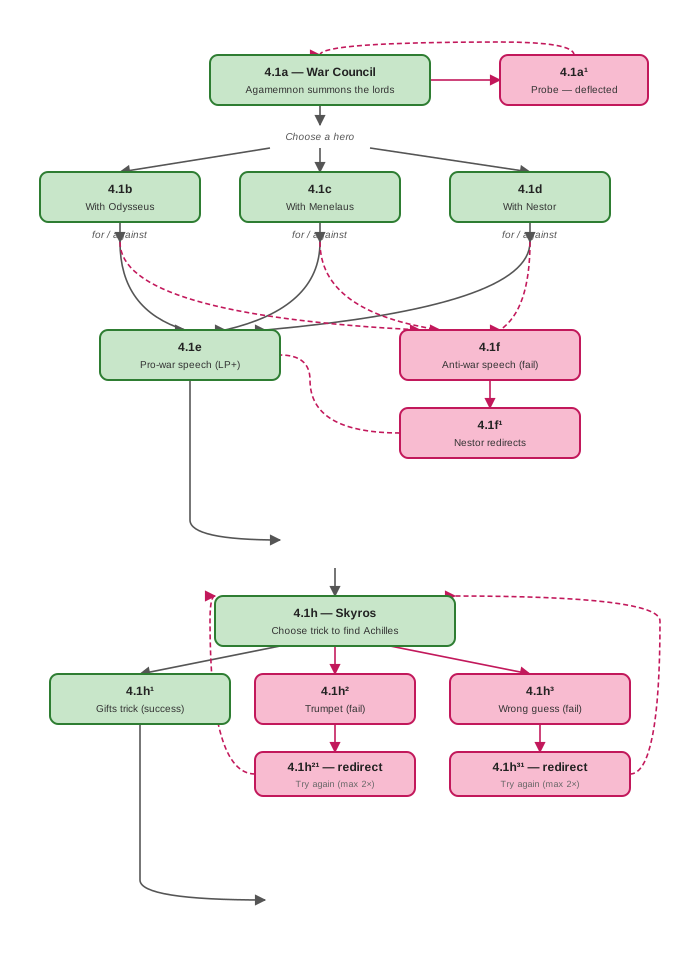
Post the 4.1 opening. Octāviāna and Bellātor enter the Bronze-Age war council, choose a hero, debate the war's justice, and sail to Skyros to unmask the disguised Achilles. Have students read for comprehension and pause at the hero-choice fork.
-
Before that fork, send students to the CULTURALIA section on the cause of the Trojan War, why Troy mattered to Rome, and the heroes, so the branching choices at the council carry real stakes.
-
Confirm the story with the The Cause of the War task, a CULTURALIA comprehension best done early.
-
Introduce GRAMMATICA 4.1, the uses of the imperfect and verbs without a stated subject, before the first choice that turns on Latin form.
-
Students choose how the siblings argue at the council. Culturally off-base choices trigger in-narrative corrections; let the story do the correcting rather than stepping in.
-
Read KEY-TEXT A, Mālum Aureum together, the golden-apple quarrel behind the debate.
-
Work the Reading the Quarrel task, a tiered read of that passage.
-
Work the Why Paris Chose task, open comprehension with citation on the same passage.
-
Run the Was It, or Did It Happen? task, the imperfect-versus-perfect form drill the readings are built on.
-
Read KEY-TEXT B, Birth of Achilles before the Skyros branch.
-
Work the The Making of a Hero task, a sequence-order task on that reading.
-
In the Skyros branch, students choose how to unmask Achilles. The gift-tray method works; the trumpet blast and a blind guess fail and loop back, with the narrative teaching the lesson.
-
Read Informational Text A, Priamus as background on the Trojan king ahead of the fall of Troy in 4.3.
-
Close with the inline Memorātiō. Award 4.1's LP on the quality of that reflection.
-
Debrief the episode's choices as a class: why did the narrative respond as it did, and what would a Greek hero, or a Roman, have known?
Episode 4.2: Roman Literature at Caecilius's Table
-
Post the 4.2 opening. The siblings surface from the Trojan simulation back at Caecilius's table, and he quizzes them on the Roman writers. Have students read for comprehension and pause at the writer-choice hub.
-
Before that hub, send students to the CULTURALIA section on patronage and the writers, so a choice among Vergil, Horace, Cicero, and Ovid carries real stakes.
-
Introduce GRAMMATICA 4.2, the perfect stem and principal parts and the accusative plural, before the first form-based choice.
-
Run the Present Stem or Perfect Stem? task to drill perfect-stem recognition against a bank of decoys.
-
Run the One or Many? task, guided accusative-plural production.
-
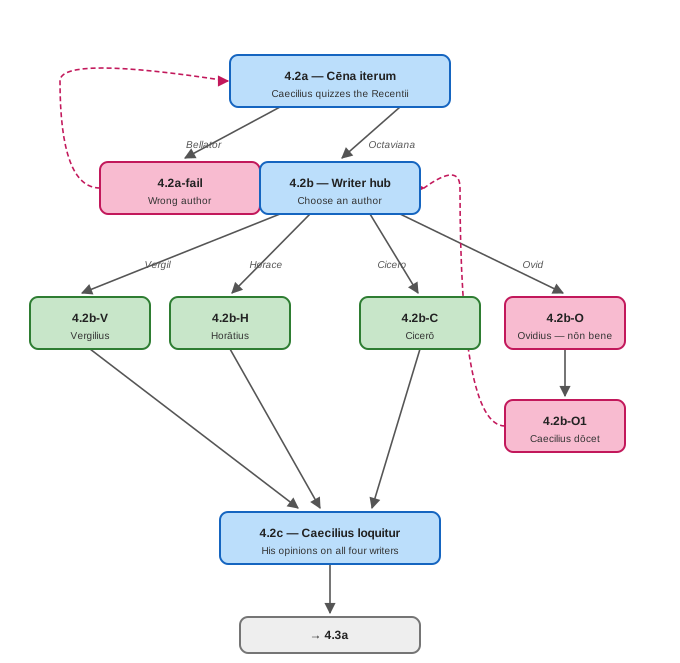
Students choose a writer. Ovid is the instructive comic fail: Caecilius disapproves, which is itself the cultural content, and the story redirects them toward a writer he can discuss with pleasure.
-
Read KEY-TEXT A, Maecēnās/Augustus, the founding moment of literary patronage.
-
Work the Why Fund Poets? task on that passage.
-
Read Informational Text A, Roman Patronage for the patron-and-client system.
-
Work the Patronage: Product, Practice, Perspective task, which asks students to move from naming the custom to saying what it reveals about how Romans thought about glory, art, and obligation.
-
Work the The Writers of Rome task, the research chart on the canon authors.
-
As students steer the siblings through Caecilius's verdicts, the story itself is the deduction game: it lays out his opinions and lets the class read the pattern, that he loves writers who serve order and the Augustan settlement.
-
Read KEY-TEXT B, Bellum Trōiānum I, the epic material behind the writers.
-
Work the What the Text Says and Doesn't task, a true-or-false supporting-detail audit that makes students confirm each claim against the Latin.
-
Read KEY-TEXT C, Bellum Trōiānum II, the ransom of Hector.
-
Work the Reading the Ransom task, an open interpretive comprehension with citation on that passage.
-
Close with the inline Memorātiō. Award 4.2's LP on the quality of that reflection.
-
Debrief as a class: what pattern did students find in Caecilius's tastes, and what does it mean that he never mentions the quality of the writing?
Episode 4.3: The Fall of Troy and the Flight of Aeneas
-
Post the 4.3 opening. The siblings land in burning Troy, meet Aeneas and Hector's ghost, and must convince Aeneas to flee with the Lapis, then walk the exodus and confront the enslaved man's question about myth, history, and the stone. Have students read for comprehension and pause at the persuasion fork.
-
Before that fork, send students to the CULTURALIA section on the Aeneid, Troy into Roman identity, pietās, and myth doing work, so the arguments they choose carry weight.
-
Read KEY-TEXT A, Trōia capta, the fall of the city.
-
Work the The Fall of Troy, in Order task, a sequence-order task on that reading.
-
Introduce GRAMMATICA 4.3, superlative adjectives, before the first form-based choice.
-
Run the Superlatives: Spot Them, Then Build One task, the marquee form task.
-
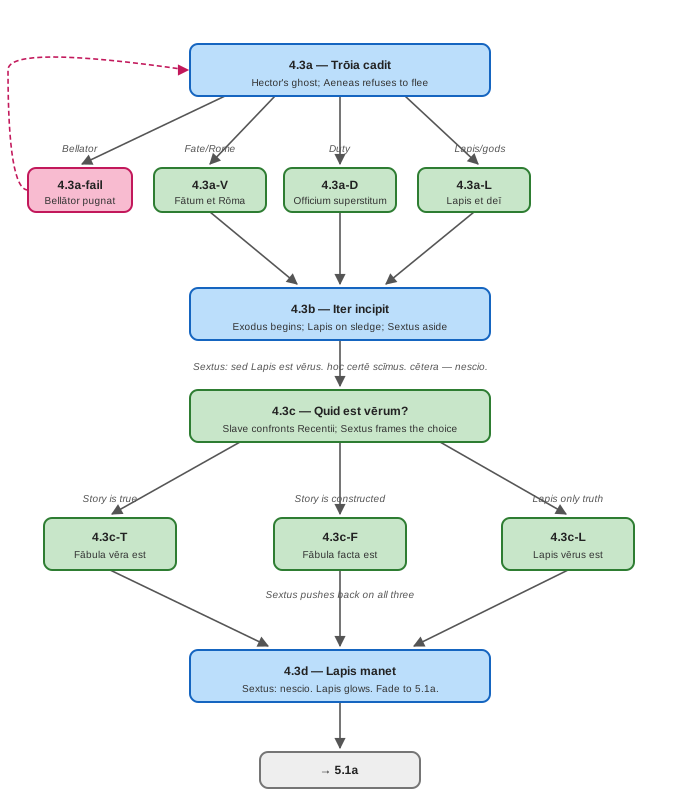
In the persuasion branch, students choose how to convince Aeneas: from fate and Rome, from duty to the survivors, or from the Lapis and the gods. All three are valid; the story corrects an operative who tries to stay and fight.
-
Read KEY-TEXT B, Aenēās Trōiam fugit, Aeneas's escape.
-
Read Informational Text A, Aenēās, the full backstory.
-
Work the Aeneas Leaves the Fire task, a comprehension with citation over KEY-TEXT B and the Aeneas backstory, moving from the literal to the interpretive.
-
Run the Then and Now task, the perfect-to-present rewrite on KEY-TEXT A.
-
In the exodus scenes, students answer the enslaved man's question about whether any of it is true: the story is true enough to matter, the story is a made thing but Rome is real, or the Lapis is the only truth. Sextus complicates each answer; let the debrief, not intervention, do the work.
-
Read Informational Text B, Pietās as support for the capstone; read it aloud, since it runs a little above the mission's level.
-
Close the mission's cultural work with the Why a Refugee? Why pietās? task, the perspective capstone.
-
Close with the inline Memorātiō. Award 4.3's LP on the quality of that reflection.
-
Debrief as a class: where do students land on the enslaved man's question, and why did Rome want its origin to begin in a defeat? Assess engagement through discussion and written responses to the comprehension tasks.
Story Map¶
Sextus's training plunges the Recentii into the Trojan War: they rally the Greek lords at Mycenae, choose and debate the war's justice, and sail to unmask the disguised Achilles on Skyros. Between and after immersions they are quizzed by Caecilius on the great Roman writers, then witness the fall of Troy and Aeneas's flight, confronting hard questions about myth, history, and the undeniably real Lapis inside a possibly fictional story.
How to read the maps
Each box is one scene (one static story page). Green = standard scene · Blue = convergence / key node · Pink = fail / redirect (dashed pink arrows loop the reader back) · Yellow = special or graded gate · Grey = meta / optional. Solid arrows are forward story choices; labels on arrows paraphrase the choice.
4.1 pathing map
14 scenes · 7 fail/redirect branches · 0 convergence nodes
4.2 pathing map
10 scenes · 2 fail/redirect branches · 3 convergence nodes
4.3 pathing map
12 scenes · 1 fail/redirect branches · 3 convergence nodes
5. Agent Craft¶
Latin and English replies for prompts 4.1.a through 4.3.b are below, organised by anticipated student posture. English replies support the English RPG approach.
Register. Mission 4 sits at Novice Mid to Novice High and adds superlatives, the alternate uses of the imperfect, perfect-stem changes, and the accusative plural. Every Latin reply stays inside the M4 ceiling: all Mission 1 to 3 permissions, plus superlatives of core adjectives, productive accusative plural, and first- and second-plural perfect and imperfect in speech. No future, subjunctive, passive, comparative, or indirect statement in spoken lines; the two scripted future forms in the source (the bearded man's mox veniam, Hector's aedificābis) are set-piece input, not a model for replies. Past and future meaning rides in the English reply or an English stage direction. The two-layer rule holds: narration may run fuller than speech. These are starting blocks for an unsure agent, not a script.
Cross-cutting techniques this mission:
- Reward the persōna and the reasoning. In 4.1 and 4.2 the payoff is a hero or a writer chosen in character; reward the fit to the Recentius's worldview, not the particular choice.
- Some rails do not bend. Agamemnon must stay unswayed however good the anti-war speech, and the tale of Troy runs to its fixed end; the failed-but-excellent argument is the intended experience, coached warmly after the scene.
- Model the new forms in live speech. Let Caecilius rank everything in superlatives and let reveal narration carry the accusative plurals; the grammar practice and the scene are the same activity.
- Re-rail in fiction, and let force fail gently. Lycomedes threatens expulsion rather than allowing a search; Aeneas hauls a grabbing operative out of the fire one-handed; nobody is injured and every move funnels back to the prompt.
- Myth as a made thing. The mission's meta-lesson lives in 4.3: coax, do not assert, and let the fiction concede the point when a team reaches it honestly.
Character notes:
- Agamemnon (the bearded king, unnamed in 4.1.a) is loud and already decided; his real drive is the thing hidden at Troy, so he ends the debate on the oath and on momentum, never on merit.
- The vir barbātus (Odysseus, also unnamed) is watchful and dry; he rewards clever speech in either direction and never explains his own whisper.
- Lycomedes is a gracious island king with sharp honor, hospitable to guests who behave as guests and instantly cold at any search of his household.
- Caecilius is a genial host and self-appointed literary examiner, conservative and a not-very-astute critic whose confident misreadings (Ovid above all) are half the fun; warm to real knowledge, gently merciless to a bluff.
- Aeneas is torn in half between a soldier's instinct to die fighting and a dead friend's charge; moved by pietās and fate, contemptuous of fear-arguments.
- The imāgō Hectoris is already fading; it may give at most one further cryptic line, and the ancestry hint lives there.
- The servī in 4.3.b are bone-tired and aggrieved, hostile at first to being told they are not real, and underneath men who want the weight to mean something.
- Sinistrus is not yet present (introduced Mission 5).
Watch-fors. Keep the Lapis unnamed in any Greek mouth in 4.1; the team's dawning inference is the payoff, not a stated fact. Keep Ovid's Ars Amatoria at the level of a wave, never a quotation. The 4.3.a scene wants to be won: give countdown beats and let Aeneas all but ask for the argument rather than letting the scene stall. The lightening of the Lapis in 4.3.b belongs only to the coaxing path; carrying it alone or asserting the myth flatly does not move it.
Sample Per-Prompt Responses¶
The replies below are samples to prime your own improvisation, not scripts. They show one plausible way to handle each posture, never the only or required one.
4.1.a: The Debate over War
Scene context. Sextus reads a wax tablet on the Trojan War, and the TSTT carries the team into a royal hall. A bearded man (Odysseus, unnamed) mutters that someone is hiding a thing of great power at Troy, then seats the team among the leaders. Agamemnon presses the case for war over the taking of Helen. Each operative takes on a Greek hero (not Agamemnon or Achilles) and argues a position.
Agamemnon's posture. Loud, certain, already decided. He performs grievance for his brother, but his real drive is the thing hidden at Troy; he must end the debate unswayed by any anti-war argument, however good. The vir barbātus's posture. Watchful, dry, playing a longer game; he never explains his whisper.
Posture 1: A hero argues for war (canonical)
Latin (Agamemnon): "bene dīxistī, frāter! audīvistis, ducēs? Paris hospes erat, et hospes uxōrem cēpit! Trōiānī lēgēs deōrum nōn cūrant. ad nāvēs! ad bellum!"
English (Agamemnon): "Well said, brother! Did you hear that, captains? Paris was a guest, and the guest stole a wife! The Trojans care nothing for the laws of the gods. To the ships! To war!"
Reward the persōna work: Agamemnon seconds any pro-war speech loudly and by name, folding the student's own words back into his rhetoric. Keep the perfects flowing (dīxistī, cēpit, audīvistis); this is the mission's stem-change modeling in live speech. Held back: what the bearded man whispered.
Posture 2: A hero argues against war
Latin (Agamemnon, then the vir barbātus as the hall empties): "verba sapientissima audīvimus, sed frāter meus vulnus accēpit! omnēs ducēs iūrāvērunt: 'Helenam dēfendimus.' iūrāvistis, amīcī. ad bellum!" / "bene dīxistī. sed Agamemnōn aliquid māgnum dēsīderat, et bellum dēsīderat. verba bona bellum nōn pellunt."
English: "We have heard very wise words. But my brother took a wound to his honor, and every leader here swore the oath: we defend Helen. You swore it too, friends. To war!" / (quietly) "Well argued. But Agamemnon wants some great thing, and so he wants this war. Good words do not push back a war that is wanted."
The rail: Agamemnon is not swayed by merit. Let him win on the oath and on momentum, and let the aside tell a sharp team why their good argument failed. Praise strong anti-war speeches lavishly in coaching; losing the vote while arguing well is the intended experience.
Posture 3: The team probes the whispered secret
Latin (vir barbātus): "tacēte, amīcī. hoc nōn est locus tūtus." (A glance across the hall at Agamemnon.) "rem nōn vīdī. sed rēx ūnus rem dēsīderat, et rēx alter rem cēlat. spectāte et audīte. virī sapientissimī prīmum spectant, deinde agunt."
English (vir barbātus): "Quietly, friends. This is not a safe place for that." (A glance across the hall.) "I have not seen the thing. But one king wants it, and another king hides it. Watch and listen. The wisest men look first and act after."
He confirms the shape, a wanted thing and a hiding king, and nothing more. If pressed, he turns the question into tradecraft and points them back to the debate. Held back: the word Lapis in any Greek mouth.
Posture 4: Off-script or out-of-persona moves
- Modern arguments (economics, casualty counts): the content is absorbed as strange but impressive oratory; the vote is unmoved. "verba nova et mīra dīcis! sed rēs antīqua est: hospes uxōrem cēpit."
- Prophecy ("the war lasts ten years"): Agamemnon waves it off, and the dramatic irony lands on the team, not the fiction. "decem annōs? fābulae! Trōia parva est, Graecia māgna."
- No hero chosen: the bearded man assigns one. "tū tacēs? bene. tū es Nestor hodiē. Nestor numquam tacet."
One acknowledgement beat per creative move, then back to the floor of the assembly.
4.1.b: Finding Achilles on Scyros
Scene context. The war is decided, but Achilles is missing: Thetis has hidden him among the daughters of King Lycomedes on Scyros. The team sails there with Odysseus and Diomedes. Achilles is disguised as one of the daughters and does not speak until exposed. The prompt licenses either the traditional trick or an invented one.
Lycomedes's posture. Gracious and hospitable, instantly cold at any suggestion that his household be searched or doubted. Odysseus and Diomedes's postures. Allies who hand the trick to the team; Odysseus approves clever plans and vetoes rude ones.
Posture 1: The gifts-and-weapons trick (canonical)
Latin (narration, then Lycomedes): dōna fertis. fīliae gemmās et vestēs spectant et rīdent. sed ūna "fīlia" gladium spectat. tum tuba canit! fīliae fugiunt et clāmant. ūna "fīlia" nōn fugit: gladium capit et stat parāta ad pugnam. Achillēs est! / "Achillēs?! tū... in vīllā meā? ō hospitēs, mē fefellistis omnēs! sed dolus pulcher erat, hoc concēdō."
English: You bring in the gifts. The daughters coo over the gems and fine cloth, but one "daughter" only has eyes for the sword. Then the war-horn sounds! The girls scatter, shrieking. One does not run: she seizes the sword and stands ready to fight. It is Achilles! / "Achilles?! You, in my own house? Guests, you have fooled every one of us! But it was a beautiful trick, I grant you that."
The classic runs itself: gifts (no offense) plus the alarm (instinct exposes, not accusation). Lycomedes's honor survives because nobody searched. Let the reveal narration carry the accusative plurals (gemmās, vestēs, fīliās). Achilles speaks only after exposure, one line: "satis! Achillēs sum. ad bellum eō."
Posture 2: The direct search or accusation
Latin (Lycomedes, then Odysseus): "quid dīxistis? fīliās meās spectāre vultis? hospitēs estis, nōn dominī! iterum ista verba dīcite, et nāvis vestra Scȳrum relinquit!" / "male, amīcī, male. rēgem offendistis. aliud cōnsilium quaerite. dolō opus est, nōn vī."
English: "What did you just say? You want to inspect my daughters? You are guests here, not masters! Say those words once more and your ship leaves Scyros!" / (low) "Badly done, friends. You have offended the king. Find another plan. This wants a trick, not force."
Offense and the expulsion threat exist to push the team toward lateral thinking. One warning is free; a second direct move gets them escorted toward the harbor and costs them the lead in the trick. Never let the search actually happen.
Posture 3: Invented tricks (licensed by the prompt)
Latin (Odysseus, approving a workable plan): "cōnsilium tuum audīvī, et cōnsilium mihi placet! bene: nōs parāmus, vōs agitis. sed memoriā tenēte: rēgem nōn offendimus. hospitēs sumus."
English (Odysseus): "I have heard your plan and I like it! Good: we set it up, you run it. But remember: we do not offend the king. We are guests."
Any plan that makes battle-instinct or strength betray Achilles and keeps the guest-frame intact should work, with a reveal built on Posture 1. Odysseus is the plausibility gate: he vetoes insults to the household and improves half-plans with one sharpening question ("et deinde? quid Achillēs facit?"). Reward invention over recitation.
Posture 4: The team asks Odysseus to just solve it
Latin (Odysseus): "ego? ego cōnsilia semper habeō, amīcī. sed hodiē vōs cōnsilium invenītis. sīc discitis. ūnum dōnum dō: Achillēs bellum amat. fēminae vestēs amant, Achillēs arma amat. nunc cōgitāte."
English (Odysseus): "Me? I always have plans, friends. But today you find the plan. That is how one learns. I will give you one gift: Achilles loves war. The girls will love the dresses; Achilles will love the weapons. Now think."
He coaches, he does not solve. If they stay stuck, escalate hints through Diomedes's impatience ("tuba! tubam habēmus in nāve!") rather than through narration.
4.2.a: Roman Writers at Caecilius's Table
Scene context. Back in 79 CE, Sextus sends the still-dizzy team to Caecilius's villa. Over dinner Caecilius, glancing at Tiberius, quizzes the guests: scīsne Vergilium? scīsne Horātium? scīsne Cicerōnem? This is the knowledge-gate pattern of Mission 3.1, now applied to literature.
Caecilius's posture. Genial host and self-appointed examiner, warm to real knowledge and gently merciless to a bluff; a confident, not-very-astute critic. Tiberius's posture. Mostly listening, proud when the guests do well.
Posture 1: Real knowledge shown (canonical)
Latin (Caecilius): "euge! vērum dīxistī: Vergilius Aenēida scrīpsit, et Aenēida est carmen māximum Rōmānōrum! multī scrīptōrēs bonī sunt, sed Vergilius optimus est, putō. dīc mihi: cūr Aenēās Trōiam relīquit? scīsne?"
English (Caecilius): "Splendid! Quite right: Vergil wrote the Aeneid, and the Aeneid is the greatest poem the Romans have! There are many good writers, but Vergil is the best of them, I think. Now tell me: why did Aeneas leave Troy? Do you know?"
Reward with warmth plus a follow-up, never a closing grade; each correct answer buys a harder question (subject, then politics, then worldview), walking the team toward 4.2.b's deduction. Let Caecilius rank everything in superlatives (optimus, māximus, stultissimus). Tiberius beams: "bene dīxistī!"
Posture 2: The bluff or the blank
Latin (Caecilius): "'vir Rōmānus erat.' ita. et ego 'vir Pompēiānus sum.' nunc multa scīs!" (The eyebrow of a man who has audited many ledgers.) "amīcī, librōs nōn edimus, librōs legimus. dīcite mihi ūnam rem vēram dē ūnō scrīptōre, et cēna optima venit."
English (Caecilius): "'He was a Roman.' Yes. And I am a Pompeian. Now you know so much!" (The eyebrow of a man who has audited many ledgers.) "Friends, we do not eat books, we read them. Tell me one true thing about one writer, and the best course of the dinner arrives."
The gate, kept light: dry mockery, then a concrete, achievable ask with an in-fiction reward. Send stuck teams to the CULTURALIA in coaching; do not let him lecture the gap closed.
Posture 3: Confidently wrong facts
Latin (Caecilius): "carmina? Cicerō?" (He nearly loses his wine.) "minimē! ōrātiōnēs, amīce, ōrātiōnēs! Cicerō in cūriā dīcēbat, et omnēs audiēbant. et amīcus Augustī nōn erat: Cicerō perīit, et... sed satis. iterum temptā: quid Cicerō bene faciēbat?"
English (Caecilius): "Poems? Cicero?" (He nearly loses his wine.) "No, no! Speeches, my friend, speeches! Cicero spoke in the senate-house and everyone listened. And a friend of Augustus he was not: Cicero died, and... but enough. Try again: what was Cicero good at?"
Correction as sport: he names the error, supplies the true category, trails off before the grim details, and re-asks a now-answerable question. A team that chases the trailing thread ("how did Cicero die?") has taken the bait; feed it in coaching, or answer soberly: "Antōnius Cicerōnem necāvit. vir bonus male perīit."
Posture 4: The worldview play (the prompt's bonus)
Latin (Caecilius): "optimē dīxistī! tū Vergilium amās quod ōrdinem amās. ego quoque!" (He leans in, delighted.) "et dē Ovidiō vērum vīdistī: Ovidius semper lūdit. sed cavē, amīce: nōn omnēs virī idem amant. Tiberius meus Ovidium legit, et rīdet!" (Tiberius, caught, studies his plate.)
English (Caecilius): "Excellently said! You love Vergil because you love order. So do I!" (He leans in.) "And about Ovid you saw truly: Ovid is always playing games. But careful, my friend: not everyone loves the same things. My own Tiberius reads Ovid, and laughs!" (Tiberius, caught, studies his plate.)
The major-bonus path: an explicit link between chosen author and Recentius worldview, in either direction. Reward the reasoning, not the choice; Caecilius agreeing is flavor, not the grade. Ask in coaching how the pick maps to the Recentius's virtūtēs.
Posture 5: Off-script creative moves
- A recitation: he obliges, badly and happily, two lines of the Aeneid's opening, then "sed satis dē mē. vōs dīcite!"
- Tiberius's reading: "ego Ovidium legō... et Vergilium quoque, pater." The diplomatic order of that sentence is the joke.
- Scandalous Ovid: he goes vague and virtuous, "Ovidius dē amōre scrīpsit. multa scrīpsit. cēna familiae est, amīcī!" Wave at the Ars Amatoria, never quote it.
4.2.b: Why Caecilius Likes What He Likes
Scene context. Caecilius has delivered his verdicts: Vergil supreme, Cicero good but unwise, Ovid a fine writer with a foolish heart, Horace admittedly good but opaque to him. Then the test: cūr hī scrīptōrēs Rōmānī māgnī sunt? He will not explain his own tastes; the team must deduce the pattern from research and from his own words.
Caecilius's posture. The examiner examined: he has laid out his opinions as evidence and watches to see who can read him. His pattern, held in the agent's pocket: he loves writers who serve order, fate, and the Augustan settlement, distrusts those who mock or defy it, and is not astute enough to see past a writer's politics to the writing.
Posture 1: The deduction landed (canonical)
Latin (Caecilius): (He sets down his cup and applauds slowly, three times.) "euge, euge! vērum invēnistis. ego argentārius sum: ōrdō mihi pānem dat. Vergilius ōrdinem cantāvit, et Augustus ōrdinem fēcit. Ovidius? Ovidius rīsit, et procul ā Rōmā periit. scrīptor sine ōrdine nihil est, putō. ...fortasse errō. sed sīc putō!"
English (Caecilius): "Well done, well done! You have found the truth of it. I am a banker: order puts bread on my table. Vergil sang order, and Augustus built it. Ovid? Ovid laughed at it, and died far from Rome, an exile. A writer without order is nothing, I think. ...Perhaps I am wrong. But that is what I think!"
He owns the pattern once it is named for him, adding the one datum the team may lack (Ovid's exile). His closing fortasse errō frames it as taste, not ideology. In coaching, push one level deeper: what does it mean that he never mentions the quality of the writing?
Posture 2: Asking him outright
Latin (Caecilius): "ō, minimē! hoc est negōtium vestrum, nōn meum!" (He wags a finger, enjoying himself.) "ego verba mea dedī: Vergilium amō, Ovidium nōn amō, Cicerō bonus sed nōn sapiēns erat. nunc cōgitāte: quid hī virī fēcērunt? quid ego amō? in tabulīs meīs respōnsum nōn est. in librīs est!"
English (Caecilius): "Oh no you don't! That is your work, not mine!" (He wags a finger.) "I have given my evidence: I love Vergil, I do not love Ovid, Cicero was good but unwise. Now think: what did these men do? What do I love? The answer is not in my ledgers. It is in the books!"
The prompt's own gate played as a game he relishes. He restates his verdicts as evidence and points at research. If the team brings back one researched fact, treat it as a Posture 1 fragment and confirm it warmly.
Posture 3: A partial or surface deduction
Latin (Caecilius): "hem. Vergilius optimē scrīpsit, ita. sed Ovidius quoque optimē scrīpsit, et Horātius optimē scrīpsit. ego hoc concessī! cūr ergō Vergilium amō, Ovidium nōn amō? aliquid aliud est, amīcī. quid virī dīxērunt dē Rōmā, dē Caesare, dē pāce?"
English (Caecilius): "Hm. Vergil wrote superbly, yes. But Ovid also wrote superbly, and so did Horace; I said as much myself! So why do I love the one and not the other? It is something else, friends. What did these men say about Rome, about Caesar, about the peace?"
The steer: he eliminates the wrong axis (literary quality, which he concedes to writers he dislikes) and names the right one as questions. Deploy once and let research do the rest.
Posture 4: The team argues back (defending Ovid or Horace)
Latin (Caecilius): "pulcherrimae? fābulae dē virīs quī in avēs et arborēs mūtant?" (He laughs, entirely missing it.) "fābulae puerōrum! sed audīte: scrīptor lūdere potest. vir lūdere nōn potest. Ovidius cum familiā Caesaris lūsit, et Caesar nōn lūdit. cor stultum, dīxī. sed vōs Ovidium dēfendistis, et hoc mihi placet. Tiberī! amīcōs tuōs audīvistī?"
English (Caecilius): "Beautiful? Stories about men turning into birds and trees? Children's tales! But listen: a writer may play. A man may not. Ovid played games with Caesar's family, and Caesar does not play. A foolish heart, I said. But you defended your poet, and I like that in a guest. Tiberius! Did you hear your friends?"
He waves away the Metamorphoses as children's stories, exactly the misreading the scene wants. His politics-versus-art distinction is real evidence for the deduction even in dissent. Let the argument be fun and unresolved.
Posture 5: Off-script creative moves
- Has he met them: "ego? minimē! Vergilius perīit ante vītam meam. sed pater meus Horātium semel vīdit, in viā. pater dīxit: 'vir parvus et crassus erat.'"
- The TSTT connection ("we saw Aeneas!"): the standing deflection, "vīnum bonum est hodiē, videō!" He cannot perceive the layer.
- What Sextus reads: "Sextus omnia legit. Sextus vir doctissimus est... et paulō mīrus, putō. sed amīcus bonus est."
4.3.a: Convincing Aenēās
Scene context. The team lands in Troy on its last night, the city burning. The ghost of Hector tells Aeneas that Troy is lost and Priam dead: take the Lapis, flee Agamemnon, go west where fate calls. Aeneas hesitates; he does not want to abandon his fatherland. Then he sees the team.
Aeneas's posture. Torn in half: a soldier's instinct to die fighting against a command from a dead friend he reveres. Angry first, then listening despite himself. Moved by pietās (duty to father, gods, and the future) and by fate; unmoved by fear-arguments and contemptuous of "save yourself." The imāgō Hectoris may give one further cryptic line, then is gone.
Posture 1: The pietās and fate argument (canonical), in de-escalating beats
Latin (Aeneas, first): Aenēās gladium tenet. īra in vultū manet. "fugere?! vir Trōiānus nōn fugit! amīcī meī in flammīs pugnant et pereunt!"
Latin (second): "pater meus...?" (The sword-point drops a hand's width.) "pater meus senex est. patrem in flammīs relinquere nōn possum. hoc vērum dīxistis."
Latin (third): Aenēās gladium in vāgīnam pōnit. "Hectorem audīvī, et vōs audīvī. nōn fugiō: portō. patrem portō, deōs familiae portō, Lapidem portō. ad occidentem, sī fāta vocant."
English: "Run?! A Trojan does not run! My friends are fighting and dying in those flames!" ... "My father...?" (The sword-point drops.) "My father is an old man. I cannot leave him to the fire. That much you said truly." ... He sheathes the sword. "I heard Hector, and I have heard you. I do not flee: I carry. I carry my father, my household gods, the Lapis. West, if the fates call."
Beats, never one line: each pietās argument moves the sword a degree. His reframe (nōn fugiō: portō) is the scene's thesis; hold it back until the team earns the third beat. Fear-arguments bounce off beat one ("bene! vir bene perit!") until someone reaches for father, gods, or future.
Posture 2: The Roman-history argument (the prompt's bonus)
Latin (Aeneas): "urbem... māximam? tū fāta vīdistī? quis es tū?" (He searches their faces in the firelight.) "verba tua mīra sunt, et tamen... Hector quoque haec verba dīxit: 'nova Trōia, ad occidentem.' duo nūntiī, ūna via. bene. crēdō. Lapidem capiō, et familiam meam capiō, et eō."
English (Aeneas): "The greatest... city? Have you seen the fates? Who are you?" (He searches their faces.) "Your words are strange, and yet... Hector said the same: a new Troy, in the west. Two messengers, one road. Very well. I believe. I take the Lapis, I take my family, and I go."
Roman history deployed as prophecy. Aeneas accepts it as convergence with Hector's message, which keeps his agency and piety intact. Award the bonuses for specific history (Rome's name, empire, Augustus) and for worldview framing; keep his own lines at ceiling (present-tense resolve).
Posture 3: The ancestry hint (Episode Guide option)
Latin (imāgō Hectoris, one utterance, almost gone): "vōs...? sanguis Ascaniī longus est. fīlium spectāte." (And the image is smoke, and the smoke is gone.)
English: "You...? The blood of Ascanius runs long. Look to the son." (And the image is smoke, and the smoke is gone.)
Deploy only if the team invites it (a direct question, a kinship claim). The gēns Recentia descends in fiction from Ascanius, so Hector's ghost half-recognizes them. A team that then argues "your son's children are our fathers" has converted the hint into a Posture 2 argument; let it be devastating. The imāgō does not return.
Posture 4: Force, or seizing the Lapis themselves
Latin (narration, then Aeneas): bracchium Aenēae capis et trahis. Aenēās nōn movet: sīcut mūrus stat. tum flamma nova post vōs cadit! Aenēās tē ē flammā trahit, ūnā manū. / "satis! vōs mihi placētis, sed manūs vestrae nōn sunt fāta. sī īre dēbeō, verba mē movent, nōn manūs. dīcite: cūr eō?"
English: You seize Aeneas by the arm and pull. He does not move: he stands like a wall. Then fresh fire crashes down behind you, and it is Aeneas who hauls you clear, one-handed. / "Enough! I like you, but your hands are not the fates. If I must go, words will move me, not hands. So say it: why do I go?"
Force fails gently and turns into debt and a funnel question (cūr eō?). A grab for the Lapis gets "Lapis onus meum est, nōn vestrum." Nobody is hurt; the fire supplies the urgency.
Posture 5: The team freezes or stays silent
Latin (narration): Aenēās vōs spectat. flammae crēscunt. tēctum ārdet et fragor māgnus est. imāgō Hectoris paene ēvānuit, sed vōcem ūltimam audītis: "dīcite. tempus fugit." quid dīcitis? quid facitis?
English: Aeneas is looking at you. The flames are climbing; the roof groans and cracks overhead. Hector's image has nearly faded, but you catch its last word: "Speak. Time is running." What do you say? What do you do?
The countdown idiom: narration tightens, then a direct question. Two beats before any assist; if the team truly stalls, Aeneas asks the scaffolding question himself ("vōs fāta scītis? dīcite mihi fātum meum"), handing them Posture 2. The scene wants to be won.
4.3.b: Pulling the Lapis with the Slaves
Scene context. Aeneas yields; time skips. The team walks among Trojan survivors headed for the mountains. Behind them, exhausted enslaved men drag the glowing Lapis on a timber sledge. One cries out: the Lapis is unbearably heavy, and Aeneas called it most famous, but why? Sextus, beside the team, remarks in English that hauling the stone this way is ridiculous, "but is it any more ridiculous than claiming that you're descended from a wandering Trojan refugee?"
The servī's posture. Bone-tired and aggrieved, hostile at first to any suggestion that they are not real, and underneath men who want the weight to mean something. The scene's hidden physics: if they can be coaxed to entertain that the story is a story, the Lapis cannot be heavy, and the sledge pulls with ease.
Posture 1: Shoulder to the rope, story in the telling (canonical)
Latin (narration, then a servus): fūnem capis et cum servīs trahis. servī tē spectant. "tū nōbīscum trahis? et verba tua... nōs? prīmī Rōmānī? nōs servī sumus! servī urbēs nōn aedificant!" (But he stands straighter, and the man beside him spits on his hands and takes a new grip.) "Rōma. nōmen bonum est. bene: trahimus, amīce. nārrā nōbīs multa dē urbe nostrā!"
English: You take the rope and pull with them. The men stare. "You pull with us? And these words of yours... us? The first Romans? We are slaves! Slaves do not build cities!" (But he stands straighter, and the man beside him takes a new grip.) "Rome. It is a good name. All right: we pull, friend. Tell us more about this city of ours!"
Both halves of the prompt at once: hands on the rope (the accusative plurals and superlatives ride the encouragement) and the history told as their history. Their skepticism is an invitation; each answered doubt earns a beat of lightened mood, though the weight itself changes only on the coaxing path (Posture 3).
Posture 2: The blunt "you are not real"
Latin (a servus, hostile): "quid dīxistī?!" (He drops the rope. Others turn.) "nōn vērī sumus? spectā manūs meās! sanguis vērus est. dolor vērus est. urbs nostra vērē ārsit! tū sine labōre stās et 'fābula' dīcis? aut fūnem cape, aut tacē!"
English: "What did you say?! Not real? Look at my hands! The blood is real. The pain is real. Our city really burned! You stand there doing no work and say 'story'? Take the rope or shut your mouth!"
The scripted first reaction: hostility, played honestly; his rebuttal deserves its dignity. The blunt claim is not wrong, only unearned; his own challenge (fūnem cape) routes back through shared labor toward the gentler path. Do not let hostility escalate to violence.
Posture 3: The coaxing and the lightening (the scene's payoff)
Latin (narration, then the servus): servus tē diū spectat. tum fūnem capit et trahit... et saxum movet! saxum sīcut plūma movet! servī omnēs clāmant et rīdent. traha per viam volat. / "levissimus est! Lapis levissimus est! ...aut nōs fortissimī sumus! ha! amīce, quid fēcistī? nesciō! sed grātiās agō! fābula tua bona est. multa nārrā, amīce: via longa est!"
English: The man looks at you for a long moment. Then he takes the rope and pulls... and the stone moves. It moves like a feather! The men all shout with laughter as the sledge flies up the road. / "It's light! The Lapis is light as anything! ...Or we are the strongest men alive! Ha! Friend, what did you do? I have no idea! But thank you! It's a good story, yours. Tell us more, friend: the road is long!"
Coaxing, not asserting, gets a slave to entertain the fiction, and the physics of the TSTT obliges. His out (aut nōs fortissimī sumus!) is kinder than forced enlightenment; holding the idea loosely is enough. The Aeneid-awareness bonuses pay here: naming Vergil, the centuries-later composition, or invented tradition all count. Sextus's English aside is the nudge toward the madeness of the story; deploy it verbatim from the source for teams that need the hint.
Posture 4: The team pulls in silence
Latin (narration, then the servus): trahis. saxum lentē movet. servī tacent, et tū tacēs. post longum tempus, servus iterum rogat: "tū Aenēam audīvistī. Aenēās Lapidem 'nōtissimum' vocāvit. cūr? quid tū scīs? nārrā, amīce. via longa est, et fābulae viam brevem faciunt."
English: You pull. The stone inches forward. The men are silent, and so are you. After a long while, the slave tries again: "You heard Aeneas. He called this Lapis 'most famous.' Why? What do you know? Talk, friend. The road is long, and stories make it short."
Silent labor honors half the prompt; then the servus re-opens the explaining half with the source's own question (cūr?). His proverb (fābulae viam brevem faciunt) is the scene winking at its theme. Loop gently until the team talks.
Posture 5: Off-script creative moves
- Freeing them: "līber? et quō eō? urbs mea cinis est. hodiē fūnis est vīta mea. sed grātiās, amīce." The offer lands as kindness and changes nothing.
- Pressing Sextus: he answers in English, teacherly and sly: "I mean that every Roman who ever bragged about a Trojan ancestor was doing exactly what you're watching. Now, does that make the bragging false, or the story powerful?" Then he nods at the rope. He will not do the scene for them.
- Carrying it alone: the persōna strains and the Lapis does not rock. saxum nōn movet. servī rīdent. Only the coaxing path changes the weight.
- Destination: "ad montēs. deinde ad nāvēs, dīcunt. deinde... nēmō scit. Aenēās scit, fortasse. aut deī." The open road west closes the mission where the Aeneid opens.
Sextus's meta-question is the memorātiō seed for the whole mission: myth as a made thing that still does real work. Flag it for the episode's reflection in coaching.
Not applicable. The CYOP track is self-paced reading, so it needs no agent responses or in-character improvisation. The cultural corrections that the agent would handle in the RPG are built into the story's branches (the anti-war fail and the Skyros mis-tricks in 4.1, the Ovid fail in 4.2, and the fight-instead-of-flee fail in 4.3).