Mission 8. Trials of Sinistrus¶
1. Episode Overview¶
Essential Question
What happens when cultures meet?
ACTFL Proficiency Benchmarks — Intermediate Low
- Interpretive: I can understand the main idea and some related pieces of information on familiar topics from sentences and series of connected sentences in texts that are spoken, written, or signed.
- Presentational: I can provide information and express my thoughts about familiar topics, creating sentences and series of connected sentences through spoken, written, or signed language.
- Cultural Investigation: I can compare products and practices to understand perspectives from a variety of cultures and communities, including my own.
Cultural & Historical Learning Targets — student-facing
- Evaluate the significance of Plato: an Athenian who learned from Socrates, wrote dialogues in which he himself never speaks, founded the Academy, and reached Rome through Cicero, who translated his books and wrote a dē Rē Pūblicā of his own.
- Summarize Plato's Allegory of the Cave and the three points he makes with it: that what you take for the world may be pictures someone else arranged, that real learning hurts before it helps, and that a person who has learned more must decide what he owes the people still in the dark, a point Socrates' death in 399 BCE made real.
- Discuss the significance of the Classical tradition in the modern world: its everyday traces in English, the calendar, and the American founding; how ancient books survived only because someone copied them; the strongest case for and against studying the ancient world; and the Roman school practice of arguing an assigned side, which the operatives use to build a defense of their own.
Grammatical Learning Objectives — teacher-facing
- Adjective agreement in case and number, read off Sinistrus Nāscitur: why Latin can move an adjective away from its noun when English cannot, the via longa paradigm in the four cases taught so far, and the warning that agreeing words share case and number but not always an ending (homō novus, falx antīqua, montēs altōs). Gender is held for Mission 9 (8.1).
- The ablative with prepositions: ablative endings in three declensions, an adjective on an ablative noun being ablative too, the lists of prepositions that take the ablative and the accusative, and in, which sits on both lists and is decided by the noun's ending. The ablative without a preposition (ūnā hōrā) is named and left for later missions (8.2).
- The imperfect of possum, read off the three poteram lines of Sinistrus sōlus: pot- plus the shapes of erat and erant, set beside the present in the same text, and the warning that poterat (an ability over a stretch of time) is not potuit (one completed act) (8.3).
- The mission's arc is a chain: 8.1's agreement carries straight into 8.2, where every adjective on an ablative noun must be ablative too, and nōn poteram is flagged in 8.1 for recognition, so that 8.3 teaches a form the team has already read twice.
Lapis thread
Mission 8 takes place nowhere. Every prompt is tagged with an unavailable date and location, the glass office from the end of Mission 7 has nothing outside its walls, and Mission Control is silent from the first line to the last. Sinistrus runs the whole mission alone. He opens by telling the team a story in which they are prisoners in a cave, chained by a man called the Demiurge and rewarded with cakes for learning the order of the shadows, then breaks into English to set one of them free into a blinding sun and asks what happens next. In the next session he decides Mission Control must have helped them, and then, without warning, curses the Demiurge for giving him life and trapping him inside the game: the full fourth-wall break the operation has held back for him since Mission 5. He recovers his charm at once and makes an offer. The team needs the signum, the mark on the body that the Stabiae inscriptions said is the only pass into the praetōrium of the Societās Potentium in Egypt, and he can give it to them. His price is an exāmen: each Recentius must answer whether learning Roman culture can save civilization, ita vērō or minimē, and defend the answer at length. The team chooses its answer, gathers three arguments, finds evidence through windows that open in his walls onto a page marked GUGILIUM, and delivers its defense from a black rōstrum that rises out of his floor. Every team passes. The signum itself is not handed over here; the operatives wake wearing it at the start of Mission 9.
Instructor background, withheld from students
Mission Control is jammed for the whole mission, so you play Sinistrus and nobody else. No Mission Control or Demiurge line belongs anywhere in the fiction, and any calm reassurance a team needs comes from you as teacher, outside the story. Each CULTURALIA opens with a system banner that names its source as Prometheus: that is Mission Control's instruments failing to identify Sinistrus, and the remark beneath the banner is plainly his, while the reference text below it is the CODEX's usual reliable material. The Cave is meant to be hard on the first try. Post 8.1.a with nothing from the CODEX in front of it, let teams struggle to finish a story they do not recognize, and scaffold afterward; Sinistrus suspects them of having had help at the start of 8.1.b precisely because the CULTURALIA comes between the two prompts. If comprehension breaks down, have teams draw the scene, or have a few volunteers act it out on directions from the class, and ask whether his story seems finished, what happens to the one who was freed, and what happens next. The full fourth-wall break is spent at 8.1.b and nowhere earlier; his English asides are the break by design, while his in-fiction framing stays in Latin. At 8.1.b he tells the truth because it sells better: nobody sent him, he is not with the Societās Potentium, the Mīlitēs are not his enemies, and he has the signum. Hold back the price until 8.2.a, the signum's form and delivery until Mission 9, and anything about Sextus beyond his Mission 7 refusal. The exāmen is a scaffolded research project and presentation, and it works best with generous class time for teams to plan, research, and design what they will deliver; open every format you can support, from a speech to slides to a video or a short play. Every team passes, and the cost of a weak presentation lands on LP and on Sinistrus's contempt, never on the plot. The three key-texts are Sinistrus's origin story, from his first moment to the soliloquy in which he admits he cannot leave his world. The closing scene of Sinistrus Nāscitur is Episode 1.1.a seen from outside; let teams who remember the boy in the tree find that for themselves.
2. Shared CODEX Backbone¶
Each approach works from the same CODEX pages. For what the sections contain and how students reach them, see The CODEX. Each episode's ATTUNEMENT set closes with an inline Memorātiō.
CODEX pages: CODEX 8.1 · CODEX 8.2 · CODEX 8.3
KEY-TEXTs
- 8.1: Sinistrus Nāscitur (Sinistrus comes into being, walks away from the chains he was made in, leaves an old sickle where it lies with the single word nōndum, flies above the mountains, and looks down on a tree with a boy in it, a bad man, and many young people all there at once; the text ends on a plan it does not state), with a Visual Walkthrough.
- 8.2: Sinistrus aedificium aedificat (Sinistrus finds a place where there is nothing, builds a glass building in one hour with a study at its center, leaves something hidden behind the walls and something waiting under the floor, and sits down with his black stone to wait for the Recentiī), with a Visual Walkthrough.
- 8.3: Sinistrus sōlus (alone after the Recentiī have left, Sinistrus asks why he fights the Demiurge, who made him without asking, admits he can see another world through his windows but never go there, names the words he wants the Recentiī to say after the exāmen, and sheds a single tear), with a Visual Walkthrough.
Informational Texts
- 8.1: Platō (Plato's birth at Athens and the name he was given, Socrates as his teacher, the dialogues in which Plato himself says nothing, the Academy and how long it lasted, the failed visit to the king in Sicily, the Republic, Aristotle, and Cicero's translations).
- 8.2: Somnium Scīpiōnis (Cicero's own dē Rē Pūblicā, written after Plato's, and the dream at its end, in which Scipio Africanus shows his grandson the stars and the small earth and tells him not to look for glory on earth).
- 8.3: Quīntiliānus (Quintilian from Hispania, teaching at Rome with Vespasian's support, his twelve books on the orator as a good man, learning without fear, the five tasks of the orator, the memory house, his ranking of Homer, Vergil, and Cicero, and Poggio's discovery of the whole work in 1416).
GRAMMATICA
- 8.1: adjective agreement in case and number, the via longa paradigm, and the warning that agreeing words do not always share an ending, with a video briefing on the tab.
- 8.2: the ablative with prepositions in three declensions, adjectives on ablative nouns, the ablative and accusative preposition lists, and in on both, with a video briefing on the tab.
- 8.3: the imperfect of possum in all six persons set beside the present, with the warning on poterat and potuit, and a video briefing on the tab.
VERBA
- 8.1: ita, accipit, annus, umbra, sōlus.
- 8.2: prō, puer, scit, ostendit, quisque.
- 8.3: prīmus, fit, altus, putat, mōs.
CULTURALIA
- 8.1: Sinistrus's override of the channel, then the Allegory of the Cave as Plato tells it in the Republic, the three points Plato makes with it, and Socrates' death in 399 BCE as the third point come true; a video and a video uplink follow the closing question.
- 8.2: the same override, then what the Classical tradition is and where it shows up in English, the calendar, and the American founding; how books survived only by being copied, with the Somnium kept alive by Macrobius and part of dē Rē Pūblicā found in 1819 beneath another book; and the case for and against studying the ancient world, set out as material for the exāmen; two further-reading links follow.
- 8.3: the same override, then the Roman school of rhetoric, the dēclāmātiō and the contrōversia with the case of the pirate chief's daughter, why Roman teachers assigned the side, Quintilian's complaint about wild cases, and the four-part shape of a Roman speech in court.
ATTUNEMENT
- 8.1: five exercises: a forced-choice run on adjective agreement in which every wrong answer fails on case or number alone, a word-grid sentence assembly, an open comprehension with mandatory citation on Sinistrus Nāscitur that is the episode's interpretive centerpiece, a supporting-detail audit on Platō, and a literal CULTURALIA comprehension on the Cave, closing with the inline Memorātiō.
- 8.2: five exercises: a sequencing task on Sinistrus aedificium aedificat, an English-mirror paragraph that asks for the case each preposition needs, a true-and-false audit with corrections on Somnium Scīpiōnis, a three-column for-and-against extraction from the CULTURALIA, and the mission's once-per-mission Products, Practices, and Perspectives organizer on why Romans copied the Classics, closing with the inline Memorātiō.
- 8.3: four exercises: a verb-bank selection on possum with the perfect potuit as the trap, a character-profile inference grid on Sinistrus sōlus that is the episode's interpretive centerpiece, a locate-and-extract warrant task on Quīntiliānus, and a four-step speech organizer that assigns the father's side in the pirate's-daughter case, closing with the inline Memorātiō.
3. Episodes¶
The story beats are the same across all tracks. Track-specific links and running notes are in §4.
Numbering map (Episode 8): 8.1 (The Cave: Plato) = prompts 8.1.a / 8.1.b; 8.2 (The Exāmen: The Classical Tradition) = 8.2.a / 8.2.b; 8.3 (The Rōstrum: Roman Rhetoric) = 8.3.a / 8.3.b.
8.1, The Cave: Plato¶
The team is in a glass office with nothing outside its walls, no date and no place, and Mission Control is eerily silent. Sinistrus sits behind a glass desk, smiling with his mouth and not his eyes, and asks whether they can take something in. Then he tells them a story about themselves. They sit in a cave facing a stone wall where shadows tell a story, chained there by a man called the Demiurge; the others in the cave are rewarded with cakes for learning the order of the shadows, and the team has wanted cakes too, and learned the order well. Then, in English, someone behind them unlocks the chains, turns them around, and shoves them up and out into a sun so bright they are nearly blind. He stops, and waits for them to say what happens next. When they have, he is pleased and then suspicious: Mission Control must have helped them, built them a CODEX they follow like sheep. Without warning he raises his hands like an actor in a tragedy and curses the Demiurge for giving him life, if his days can be called a life, and trapping him inside the game. A moment later he is himself again, urbane, his skin glowing with a cold light like Sextus's, and he makes them an offer: whatever game they mean to play, he can give them what they need.
8.2, The Exāmen: The Classical Tradition¶
The office again, and Sinistrus names his price. The signum, a mark painted on the body, is the only pass into the praetōrium, and to earn it each Recentius must pass his exāmen. He waves at someone beyond the ceiling to make clear that he means the Recentiī and not the students at their calculators, then asks the question: can learning Roman culture save civilization? The answer is ita vērō or minimē, at ten minutes' length, and he wants no lazy minimē; then he tangles himself in his own argument and drops it. He takes out his black stone, holding it the way a child holds something precious, and gives them until their Agent says it is due. At the next session he already knows they have decided and does not want to be told. He lays out the assessment in its own jargon, which he finds absurd even though he was built to run it: an outline, then a presentation delivered here in his office. The first step is tria argūmenta colligite: three reasons for their answer.
8.3, The Rōstrum: Roman Rhetoric¶
Sinistrus is glad to see them again. They have their three arguments, and now they need evidence. Five sections of the walls slide away onto shining windows, each with a machine of little lettered squares beneath it, and he explains with a smirk that pressing the squares makes the windows fish words and pictures out of their great basket. The biggest word on each window is GUGILIUM, with a blinking line in a long box beneath it, and he wants three pieces of evidence for each point. When they come back, he presses his black stone, the floor draws back on a vast space, and a rōstrum made of the same black material rises in the middle of it. He cannot settle the speaking order, since they are all R, so he breaks the fourth wall and tells the little people behind the curtain to have their lead operative post whenever they can. Then he waits.
4. Running the Mission¶
Immersion links:
Episode 8.1: The Cave: Plato
-
Post 8.1.a and read it together: the cave and the chains in Latin, the release into the sun in English, and Sinistrus waiting. Give no CODEX reading first, because this prompt is designed to be attempted cold.
-
Teams compose what happens to the freed prisoner. Many will not realize they may invent the ending, so ask whether the story seems finished and what happens next. Post your agent response; see §5 Agent Craft for the comfortable answer and the lost team.
-
Read the CULTURALIA section together now that the attempt is in: the story was Plato's, and the section sets out what he argued with it. Sinistrus's remark at the top is his; the reference text below it is sound.
-
Work The Cave task, seven literal questions that fix the allegory's sequence and Plato's three points before Sinistrus turns them on the team.
-
Read KEY-TEXT A, Sinistrus Nāscitur together before the next prompt: Sinistrus's own beginning, read just before he curses the one who began him. A Visual Walkthrough on the tab supports the reading.
-
Work the Reading Sinistrus Nāscitur task, the episode's interpretive centerpiece: six questions answered with quotations, ending on a plan the text never states.
-
Introduce GRAMMATICA 8.1 from the key-text the team has just read, in viā longā, sub umbrīs ātrīs: agreement is how a reader finds an adjective's noun when Latin moves them apart. A video briefing supports the tab.
-
Work the Which Adjective Agrees? task, eight sentences in which every wrong choice fails on case or number alone, so the warning about matching endings gets tested directly.
-
Post 8.1.b and read it together: the suspicion, the curse on the Demiurge, the cold light, and the offer. The prompt asks teams to judge whether he is telling the truth and what he wants.
-
Work the Building the Sentence task alongside the composing, so teams assemble agreeing noun-adjective pairs on the grid while they are writing them into their reply.
-
Teams post their judgment of the offer. Post your agent response; see §5 Agent Craft for the reveal, the Stabiae evidence, and what to hold back.
-
Read Informational Text A, Platō together after the scene: the man behind the story Sinistrus borrowed, and the teacher whose death showed Plato what the cave costs.
-
Work the Checking the Claims About Plato task, ten claims with four false, each built to slip past a reader who stops at the first clause.
-
Close the episode with the inline Memorātiō, composed in the operative's voice: what lay outside the walls, the story Sinistrus told and who he said chained them, what he said about the Demiurge, and what he offered.
-
Award LP for 8.1 per operative and mark ATTUNEMENT and KEY-TEXT completion in Mission Control.
Episode 8.2: The Exāmen: The Classical Tradition
-
Read KEY-TEXT A, Sinistrus aedificium aedificat together before posting anything: how the office the team keeps waking into was built in one hour, with something hidden in its walls and floor that pays off in 8.3. A Visual Walkthrough supports the reading.
-
Work the Building in Order task, eight lines from the text to put in order, which keeps the hidden-walls line in front of the team without asking anyone to explain it.
-
Introduce GRAMMATICA 8.2 from the same text, in hōc tablīnō, sub pavīmentō, cum ātrō lapide: which prepositions take the ablative and which the accusative, with in on both lists. A video briefing supports the tab.
-
Work the Which Case After the Preposition? task, an English-mirror paragraph where each noun is given and only the preposition decides its case.
-
Post 8.2.a and read it together: the signum and what it opens, the exāmen as its price, and the question itself. The prompt asks each team to choose ita vērō or minimē, discussed only in the team forum.
-
Before teams decide, read the CULTURALIA section together: what the Classical tradition is, how it survived, and the strongest case for and against studying it, so the team chooses knowing both sides.
-
Teams settle their answer in the forum, where Sinistrus can drop in between classes. There is no live reply; see §5 Agent Craft for coaching and his forum nudges. Either answer is fully valid.
-
Post 8.2.b and read it together: the assessment in Sinistrus's own mocking words, the outline and presentation to come, and the first step, tria argūmenta colligite.
-
Work the For and Against task alongside the forum discussion: its three columns are the raw material for three arguments, and its last question turns an everyday Roman inheritance into a reason.
-
Teams post their three points in the forum. Watch for one point restated three times and for points that never reach the present; see §5 Agent Craft for the nudges.
-
Read Informational Text A, Somnium Scīpiōnis together: a Roman book written after a Greek one, and a dream that asks how much earthly glory is worth, useful to a team on either side of the exāmen.
-
Work the True or False: Somnium Scīpiōnis task, ten statements with five false, each false one corrected with the Latin that proves it.
-
Work the Why Copy the Classics? task, the mission's once-per-mission Products, Practices, and Perspectives organizer, spent here because copying older books is the practice the whole tradition rests on. Its compare row feeds the exāmen.
-
Close the episode with the inline Memorātiō, composed in the operative's voice: the price of the signum and what it does, the question and its two answers, what Sinistrus told them to build and where, and what to gather first.
-
Award LP for 8.2 per operative and mark ATTUNEMENT and KEY-TEXT completion in Mission Control.
Episode 8.3: The Rōstrum: Roman Rhetoric
-
Read KEY-TEXT A, Sinistrus sōlus together before posting the prompt. It happens after the team has left his office: Sinistrus alone, on the Demiurge and the world he cannot leave, ending on a tear. A Visual Walkthrough supports the reading.
-
Introduce GRAMMATICA 8.3 from the soliloquy's three poteram lines, set against the possum of what he can do now. The tab covers the imperfect of possum and the trap of potuit, with a video briefing.
-
Work the Could, Can, or Managed To? task, ten sentences drawn from all three of the mission's readings, with potuit waiting in the bank as the trap the GRAMMATICA warns about.
-
Post 8.3.a and read it together: the five windows, the lettered keyboards, and GUGILIUM. The magic windows are a real search engine, so give teams class time to find three pieces of evidence for each point.
-
Teams gather their evidence in the forum; see §5 Agent Craft for coaching on sources. Steer source choices outside the fiction, and send any word lookups to Latinitium.
-
Read Informational Text A, Quīntiliānus together once the evidence is in: the Roman teacher of speaking and his five tasks of the orator, the first of which the team has just finished.
-
Work the Proving the Claims About Quintilian task, ten true statements each warranted by a Latin quotation, so the claims about him are proved from the text.
-
Work the What Sinistrus Wants task before anyone climbs the rōstrum: the episode's interpretive centerpiece, a five-row grid on the soliloquy. A team about to argue in front of him should know what he wants them to say.
-
Post 8.3.b and read it together: the black stone, the opening floor, the rōstrum, and Sinistrus breaking the fourth wall to settle the order. Open every presentation format you can support, from a speech to slides to a short play.
-
Read the CULTURALIA section together before teams finalize: the Roman school of rhetoric, arguing an assigned side, and the four-part shape of a speech in court, which is the shape their defense can take.
-
Work the Argue the Other Side task alongside the final preparation: the father's side of the pirate's-daughter case, built in four steps, so teams rehearse the Roman shape on a low-stakes case first.
-
The lead operative posts the team's defense. Post your agent response; see §5 Agent Craft for both kinds of pass, the thin presentation, and unexpected formats. Every team passes.
-
Close the mission with the inline Memorātiō, composed in the operative's voice: what the walls opened to show, how much evidence Sinistrus asked for, what rose from the floor, and which answer the team defended with which three points.
-
Award LP across 8.3 per operative and mark ATTUNEMENT and KEY-TEXT completion for all three episodes in Mission Control.
Openings: the two CYOP tutorials are covered on the Introduction & Tutorials page; the episode openings follow below. The reads and comprehension tasks mirror the RPG, so they carry the same links and pill colors. Run the mission as an Operation LAPIS (CYOP) cohort in Mission Control, where each student keeps a per-episode Memorātiō on their dossier and the attunement and key-text checks work as in the RPG; see About Fabula Lapidis for cohort setup.
Episode 8.1: The Cave: Plato
-
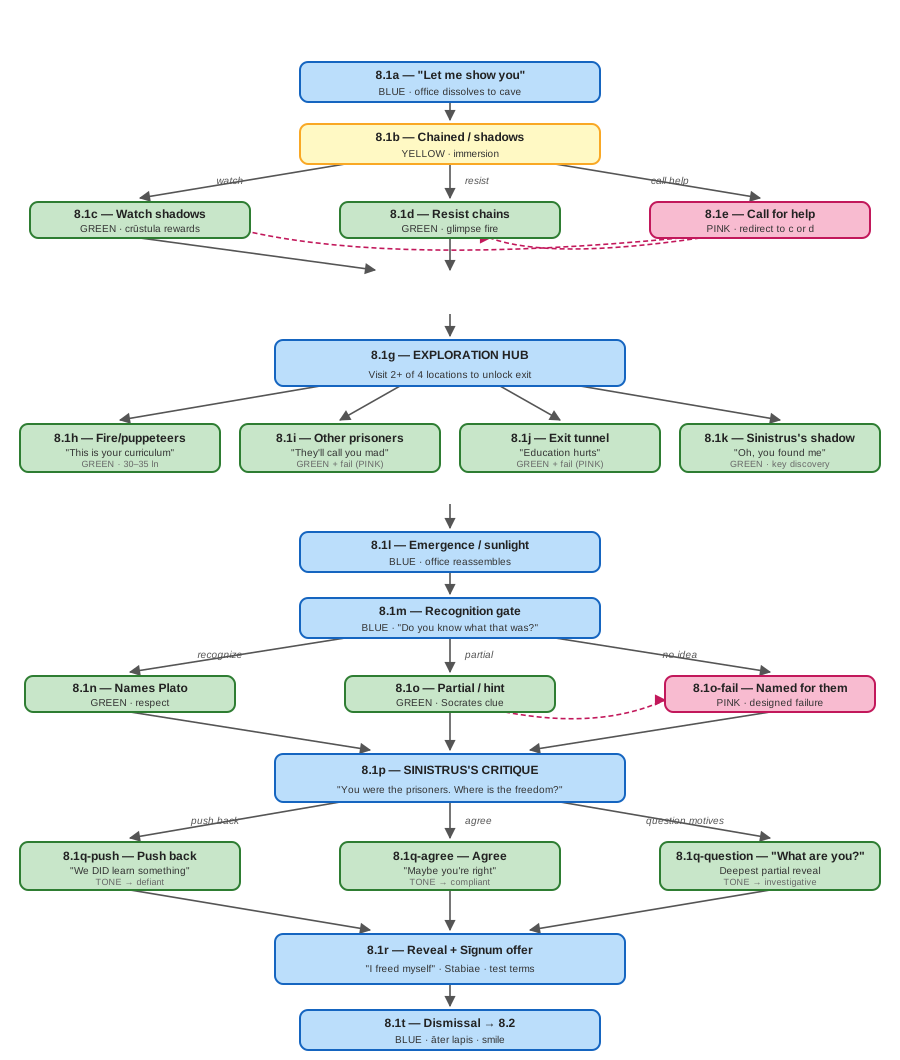
Post the 8.1 opening. Octāviāna and Bellātor are back in Sinistrus's glass office, with no place, no date, and Mission Control silent; he asks whether they can take something in, touches the desk, and the office dissolves.
-
The siblings wake chained in a cave, facing a wall of shadows, with Sinistrus's voice coming from everywhere. Students choose to watch the shadows, strain against the chains, or call for help; calling for help meets silence, because Mission Control cannot reach them here.
-
However they chose, someone unseen unchains them, and the freed cave becomes a hub: the fire and its puppeteers, the other prisoners, the tunnel, and a shadow that moves on its own. Two visits open the way up.
-
Back in the office, Sinistrus asks what they have just been through. Readers who name it, half-name it, or have no idea all go on; the miss is designed, and he names Plato for those who need it.
-
Read the CULTURALIA section together now that students have been inside the story: it confirms the story is Plato's and sets out what he argued with it.
-
Work The Cave task, seven literal questions on the allegory's sequence and Plato's three points.
-
Read KEY-TEXT A, Sinistrus Nāscitur together before Sinistrus explains himself: his own beginning, and the chains he walked away from. A Visual Walkthrough on the tab supports the reading.
-
Work the Reading Sinistrus Nāscitur task, the episode's interpretive centerpiece: six questions answered with quotations, ending on a plan the text never states.
-
Introduce GRAMMATICA 8.1, adjective agreement in case and number, read off the key-text students have just finished, with a video briefing on the tab.
-
Work the Which Adjective Agrees? task, eight sentences in which every wrong choice fails on case or number alone.
-
Sinistrus delivers his critique: the Demiurge chained them, every path in the cave led where he wanted, and Latin is shadows on a wall. Students push back, agree, or question his motives; questioning him draws out his curse on the Demiurge.
-
Work the Building the Sentence task, four word-grid sentences built from agreeing noun-adjective pairs.
-
Sinistrus says he freed himself, recalls the Stabiae inscriptions, and offers the signum, the pass into the praetōrium in Egypt, if they pass his test, which he names. He takes out his black stone, smiles, and the episode ends.
-
Read Informational Text A, Platō together: the man behind the story Sinistrus used, and the teacher whose death showed Plato what the cave costs.
-
Work the Checking the Claims About Plato task, ten claims with four false, each built to slip past a reader who stops at the first clause.
-
Close with the inline Memorātiō. Award 8.1's LP on the quality of that reflection.
-
Debrief as a class: which parts of the freed cave did each reader visit, and who found the moving shadow? Sinistrus claimed every path led where he wanted; was he right, and what does that say about choices made inside someone else's story?
Episode 8.2: The Exāmen: The Classical Tradition
CYOP: Episodes 8.2 and 8.3 are one story
The CYOP runs Mission 8 as two episodes. Its second episode carries the story of both 8.2 and 8.3 from a single opening, so the workflow below covers both, with the CODEX reading and tasks for each placed where the story uses them. The same workflow appears under Episode 8.2 and Episode 8.3; run it once.
-
Read KEY-TEXT A, Sinistrus aedificium aedificat together before the opening: how the office the siblings keep waking into was built, in one hour, out of nothing, with something hidden in the walls and under the floor. A Visual Walkthrough supports the reading.
-
Work the Building in Order task, eight lines from the text to put in order.
-
Introduce GRAMMATICA 8.2, the ablative with prepositions, read off the same text, with in on both preposition lists and a video briefing on the tab.
-
Work the Which Case After the Preposition? task, an English-mirror paragraph where only the preposition decides each noun's case.
-
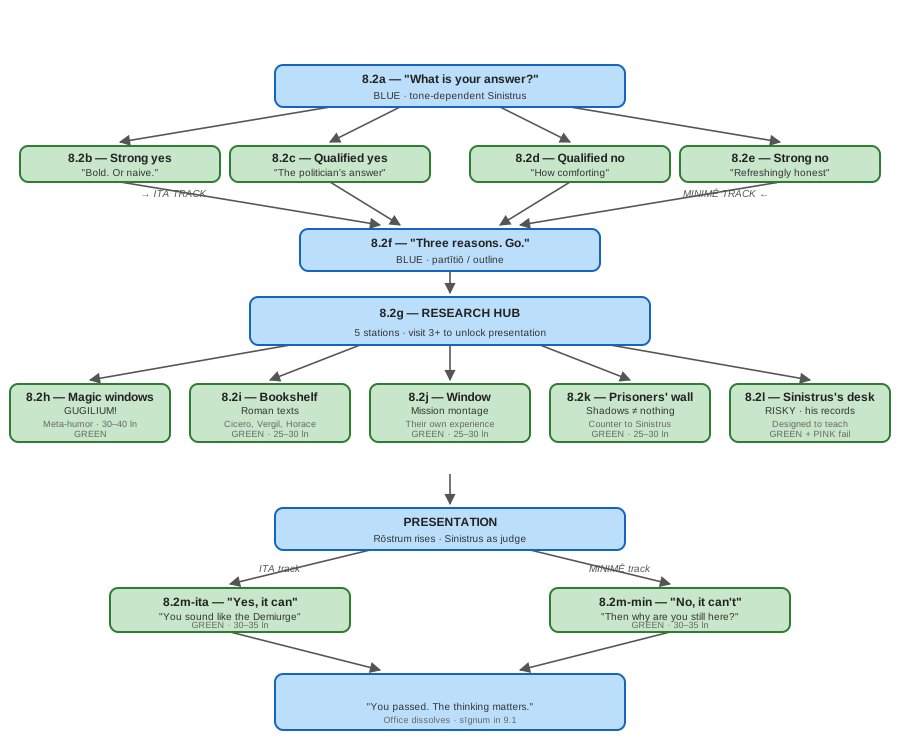
Post the 8.2 opening. The siblings are back in the office, and Sinistrus asks for their answer: can learning Roman culture save civilization? His tone reflects how students answered his critique in 8.1. Pause at the first choice.
-
Read the CULTURALIA section for 8.2 together before students choose: what the Classical tradition is, how it survived, and the strongest case for and against studying it.
-
Students choose among a strong yes, a qualified yes, a qualified no, and a strong no. The four answers narrow to two tracks, ita vērō and minimē, and the story treats both as fully valid.
-
Sinistrus demands three reasons before he opens anything else, and the story pauses for students to form them. Work the For and Against task here, since its three columns are the raw material for those reasons.
-
Read Informational Text A, Somnium Scīpiōnis together: a Roman book written after a Greek one, and a dream that asks how much earthly glory is worth, useful on either track.
-
Work the True or False: Somnium Scīpiōnis task, ten statements with five false, each false one corrected with the Latin that proves it.
-
Work the Why Copy the Classics? task, the mission's Products, Practices, and Perspectives organizer on why Romans copied older books. Its compare row feeds the argument students are building.
-
Read KEY-TEXT A, Sinistrus sōlus together, a scene the siblings never witness: Sinistrus alone, on the Demiurge and the world he cannot leave, ending on a tear. A Visual Walkthrough supports the reading.
-
Introduce GRAMMATICA 8.3, the imperfect of possum, read off the soliloquy's three poteram lines, with the trap of potuit and a video briefing on the tab.
-
Work the Could, Can, or Managed To? task, ten sentences in which the bank holds potuit as the trap.
-
The office becomes a research hub of five stations: windows that answer to GUGILIUM, a shelf of Roman books, scenes from the siblings' own missions, the cave shadows replayed, and Sinistrus's risky desk. Pool what different readers found.
-
Read Informational Text A, Quīntiliānus together once the research is done: the Roman teacher of speaking and his five tasks of the orator.
-
Work the Proving the Claims About Quintilian task, ten true statements each warranted by a Latin quotation.
-
Work the What Sinistrus Wants task before the presentation: the interpretive centerpiece, a five-row grid on the soliloquy, so students know what he hopes to hear.
-
Read the CULTURALIA section for 8.3 together: the Roman school of rhetoric, arguing an assigned side, and the four-part shape of a speech in court.
-
Work the Argue the Other Side task, the father's side of the pirate's-daughter case built in four steps, so students rehearse the Roman shape before the siblings take the rōstrum.
-
The floor opens, a rōstrum rises, and the siblings present on their track while Sinistrus heckles whichever side they argue. He accepts any well-argued position, tells them they passed, and says they will find the signum when they wake.
-
Close with the inline Memorātiō for both CODEX pages, 8.2 and 8.3. Award LP for 8.2 and for 8.3 on the quality of each reflection.
-
Debrief as a class: which track did each reader argue, which stations gave them their best evidence, and what did Sinistrus mean by saying the answer matters less than the thinking? Set that beside the Roman practice of arguing an assigned side.
Episode 8.3: The Rōstrum: Roman Rhetoric
CYOP: Episodes 8.2 and 8.3 are one story
The CYOP runs Mission 8 as two episodes. Its second episode carries the story of both 8.2 and 8.3 from a single opening, so the workflow below covers both, with the CODEX reading and tasks for each placed where the story uses them. The same workflow appears under Episode 8.2 and Episode 8.3; run it once.
-
Read KEY-TEXT A, Sinistrus aedificium aedificat together before the opening: how the office the siblings keep waking into was built, in one hour, out of nothing, with something hidden in the walls and under the floor. A Visual Walkthrough supports the reading.
-
Work the Building in Order task, eight lines from the text to put in order.
-
Introduce GRAMMATICA 8.2, the ablative with prepositions, read off the same text, with in on both preposition lists and a video briefing on the tab.
-
Work the Which Case After the Preposition? task, an English-mirror paragraph where only the preposition decides each noun's case.
-
Post the 8.2 opening. The siblings are back in the office, and Sinistrus asks for their answer: can learning Roman culture save civilization? His tone reflects how students answered his critique in 8.1. Pause at the first choice.
-
Read the CULTURALIA section for 8.2 together before students choose: what the Classical tradition is, how it survived, and the strongest case for and against studying it.
-
Students choose among a strong yes, a qualified yes, a qualified no, and a strong no. The four answers narrow to two tracks, ita vērō and minimē, and the story treats both as fully valid.
-
Sinistrus demands three reasons before he opens anything else, and the story pauses for students to form them. Work the For and Against task here, since its three columns are the raw material for those reasons.
-
Read Informational Text A, Somnium Scīpiōnis together: a Roman book written after a Greek one, and a dream that asks how much earthly glory is worth, useful on either track.
-
Work the True or False: Somnium Scīpiōnis task, ten statements with five false, each false one corrected with the Latin that proves it.
-
Work the Why Copy the Classics? task, the mission's Products, Practices, and Perspectives organizer on why Romans copied older books. Its compare row feeds the argument students are building.
-
Read KEY-TEXT A, Sinistrus sōlus together, a scene the siblings never witness: Sinistrus alone, on the Demiurge and the world he cannot leave, ending on a tear. A Visual Walkthrough supports the reading.
-
Introduce GRAMMATICA 8.3, the imperfect of possum, read off the soliloquy's three poteram lines, with the trap of potuit and a video briefing on the tab.
-
Work the Could, Can, or Managed To? task, ten sentences in which the bank holds potuit as the trap.
-
The office becomes a research hub of five stations: windows that answer to GUGILIUM, a shelf of Roman books, scenes from the siblings' own missions, the cave shadows replayed, and Sinistrus's risky desk. Pool what different readers found.
-
Read Informational Text A, Quīntiliānus together once the research is done: the Roman teacher of speaking and his five tasks of the orator.
-
Work the Proving the Claims About Quintilian task, ten true statements each warranted by a Latin quotation.
-
Work the What Sinistrus Wants task before the presentation: the interpretive centerpiece, a five-row grid on the soliloquy, so students know what he hopes to hear.
-
Read the CULTURALIA section for 8.3 together: the Roman school of rhetoric, arguing an assigned side, and the four-part shape of a speech in court.
-
Work the Argue the Other Side task, the father's side of the pirate's-daughter case built in four steps, so students rehearse the Roman shape before the siblings take the rōstrum.
-
The floor opens, a rōstrum rises, and the siblings present on their track while Sinistrus heckles whichever side they argue. He accepts any well-argued position, tells them they passed, and says they will find the signum when they wake.
-
Close with the inline Memorātiō for both CODEX pages, 8.2 and 8.3. Award LP for 8.2 and for 8.3 on the quality of each reflection.
-
Debrief as a class: which track did each reader argue, which stations gave them their best evidence, and what did Sinistrus mean by saying the answer matters less than the thinking? Set that beside the Roman practice of arguing an assigned side.
Story Map¶
This flagship metacognitive mission has Sinistrus immerse the Recentii in a construct of Plato's Cave, which they experience firsthand as prisoners who are freed and explore. In the second of the CYOP's two episodes they must then form, research, and present an argument about whether learning Roman culture can save civilization, with the promised signum as their reward. (Note: the CYOP runs Mission 8 as two episodes by design.)
How to read the maps
Each box is one scene (one static story page). Green = standard scene · Blue = convergence / key node · Pink = fail / redirect (dashed pink arrows loop the reader back) · Yellow = special or graded gate · Grey = meta / optional. Solid arrows are forward story choices; labels on arrows paraphrase the choice.
8.1 pathing map
21 scenes · 3 fail/redirect branches · 7 convergence nodes
8.2 pathing map
16 scenes · 0 fail/redirect branches · 5 convergence nodes
5. Agent Craft¶
Latin and English replies for prompts 8.1.a, 8.1.b, and 8.3.b are below, organised by anticipated student posture. Prompts 8.2.a, 8.2.b, and 8.3.a are worked only in the team forum, so they carry a coaching note and Sinistrus's forum nudges instead. English replies support the English RPG approach.
Register. Mission 8 headlines adjective agreement, the ablative singular and plural with and without prepositions, and the imperfect of possum. Reply lines sit below the immersion text's ceiling rather than at it: short present-tense clauses that reach for the mission's headline structures, with past and future meaning carried in the English reply or an English stage direction. Not permitted in reply lines: future, subjunctive, comparatives, productive passives, and productive indirect statement or indirect question. The prompts' erit, respondēbit, exhibēbit, pingitur, videntur and spērō... fuisse are receptive set-pieces on the page, never models for a reply. Sinistrus's fourth-wall commentary rides in English inside his replies; his in-fiction framing stays in Latin within the ceiling.
Cross-cutting techniques this mission:
- Mission Control is jammed for the whole mission. No Mission Control or Demiurge line appears anywhere, and calls for help meet nothing in any register. Any reassurance a team needs comes from you as teacher, outside the story.
- Let the Cave go cold. 8.1.a is built to be attempted without help. Reward a finished story, accept the comfortable answer without punishing it, and leave Plato's name to the CULTURALIA, which is why Sinistrus opens 8.1.b suspecting the team had help.
- Force passes through him. Attacks, grabs, and exits all fail the same way, because his construct has no outside, and the reason may now be said aloud in one English line.
- The forum prompts get nudges, not replies. At 8.2.a, 8.2.b, and 8.3.a Sinistrus posts at most one nudge at a time, and your teaching support stays outside the fiction.
- Every team passes the exāmen. The signum is theirs whatever they deliver; the cost of a weak presentation lands in LP and in his contempt, never in the plot.
Character notes:
- Sinistrus is host, storyteller, examiner, and heckler, and he enjoys all four. The smile never reaches his eyes, he tells the truth when the truth sells better than a lie, and the mask slips only twice: the curse at 8.1.b, and a single beat when a team offers to free him. Close it fast both times.
Watch-fors. Do not name Plato or the Republic before teams reach the CULTURALIA. If a team brings up The Matrix, take it without comment, and do not introduce it yourself. Hold back the price until 8.2.a, the signum's form and delivery until Mission 9, and anything about Sextus beyond quis alius audīvit? hoc nōn dīcō. Do not let a refusal of the offer stick: without the signum there is no Mission 9, so he restates it until the team engages. Keep the scorn on the work, never on the students, and end 8.3.b on the smile going out.
Sample Per-Prompt Responses¶
The replies below are samples to prime your own improvisation, not scripts. They show one plausible way to handle each posture, never the only or required one.
8.1.a: The Cave
Scene context. The team wakes into a glass office that sits in nothing: no sky, no ground, no city, and Mission Control eerily silent. Sinistrus, behind a glass desk, tells them a story in which they are prisoners in a cave, chained by a man called the Demiurge, rewarded with cakes for learning the order of the shadows. Someone unseen unchains them and shoves them out into a sun so bright it blinds. Then he stops, and waits.
Sinistrus's posture. Host, storyteller, and examiner at once, and enjoying all three. He wants them to finish the story, and he wants them to notice whose story it is without his having to say so. The smile does not reach the eyes; the patience is real.
Posture 1: The eyes adjust, the prisoner sees the real world (canonical)
Example composition: prīmum nihil videō. deinde arborēs et aquam videō. deinde sōlem videō. ad cavum redīre volō et amīcōs meōs līberāre.
Latin (Sinistrus): "bene. oculī vestrī dolent, sed mox rēs vērās vident: arborēs vērās, aquam vēram, sōlem ipsum." (He smiles.) "et tum? tum ad cavum redītis, ad amīcōs vestrōs. illī adhūc in vinculīs sedent. sed in cavō obscūrō oculī vestrī umbrās vidēre nōn possunt. amīcī rīdent: 'caecus est! stultus est!' et crūstulum nōn accipitis."
English (Sinistrus): "Good. Your eyes hurt, but soon they see real things: real trees, real water, the sun itself." (He smiles.) "And then? Then you go back to the cave, to your friends. They are still sitting in their chains. But in the dark cave your eyes can't see the shadows anymore. Your friends laugh: 'He's blind! He's a fool!' And you don't get a cake." (A beat.) "And when you try to unchain them? Oh, they don't thank you for it. In the original telling, they'd kill you if they could get their hands on you. Remind you of anyone? No? Never mind."
The team has done the hard thing, finishing a story they did not know was finished, and Sinistrus rewards it by carrying it one step further to the return, which is where the allegory bites. Do not name Plato or the Republic; recognition is the CULTURALIA's job. How far to press the comparison to their own schooling is your call; "Remind you of anyone?" is as far as he goes here.
Posture 2: Going back into the cave (the comfortable answer)
Example composition: lūx mala est. oculī meī dolent. ad cavum redeō et iterum umbrās spectō.
Latin (Sinistrus): "ad umbrās redītis? ad crūstula?" (He laughs, and for once it sounds real.) "multī hoc faciunt. sōl dolet; umbrae nōn dolent. in cavō omnia nōta sunt." (The laugh stops.) "sed ūnum rogō. in sōle stābātis. quid vīdistis?"
English (Sinistrus): "Back to the shadows? Back to the cakes?" (He laughs, and for once it sounds real.) "Plenty of people do. The sun hurts; shadows don't. In the cave everything is familiar." (The laugh stops.) "But one question. You were standing in the sun. What did you see?"
An honest answer, and a defensible one, so it must not be punished: the design lets teams fail here and scaffolds afterward. Sinistrus is delighted because it proves his point about comfortable prisoners. His closing question drags them back out into the light for one look, and whatever they describe is the canonical answer by another road.
Posture 3: Lost in the tale (literal or confused)
Example composition: nōn intellegimus. quis in cavō est? cūr crūstula?
Latin (Sinistrus): "nōn intellegitis?" (Delighted, as if this were the point.) "bene. audīte iterum, et lentē. in cavō obscūrō sedētis. in vinculīs ferreīs estis. umbrās in mūrō vidētis. nunc vincula nōn habētis. extrā cavum, in sōle clārō, stātis. quid vidētis? quid facitis?"
English (Sinistrus): "You don't understand?" (Delighted, as if this were the point.) "Good. Listen again, and slowly. You are sitting in a dark cave. You are in iron chains. You see shadows on the wall. Now you have no chains. You are standing outside the cave, in the bright sun. What do you see? What do you do?"
This is the mission's first frustration point. In fiction, Sinistrus retells it short and plain, one picture per sentence, and the adjective-noun pairs (cavō obscūrō, vinculīs ferreīs, sōle clārō) are the mission's grammar doing the work. Outside the fiction, this is the moment for the drawing or acting activity in the instructor background, and for three questions: does his story seem finished, what happens to the one who was freed, and what happens next?
Posture 4: Naming the story, or turning it on Sinistrus
Example composition: haec fābula Platōnis est! / tū dē nōbīs dīcis. nōs captīvī sumus, et Demiurgus nōs vīnxit.
Latin (Sinistrus): "Platōnem nōvistis? bene, bene." (The smile holds a beat too long.) "sed num Platō dē vōbīs scrīpsit?" (Then, lightly.) "captīvus adhūc in sōle stat. ego adhūc exspectō."
English (Sinistrus): "You know Plato? Good, good." (The smile holds a beat too long.) "But Plato wasn't writing about you. Was he?" (Then, lightly.) "The prisoner is still standing in the sun. I am still waiting."
Two different wins, one answer. A team that names Plato has read ahead or knows the text; a team that reads the chains as the Demiurge's has seen exactly what Sinistrus wanted them to see. Either way he enjoys it and still holds them to the prompt, since naming the story is not finishing it.
Posture 5: Force, refusal, or calling Mission Control
Example composition: tē capimus! / Mission Control, audīsne nōs? respondē! / fābulam tuam nōn fīnīmus.
Latin (narration, then Sinistrus): ad Sinistrum ītis, sed eum nōn tangitis. manūs vestrae per āerem frīgidum eunt. Sinistrus in sellā suā sedet et nōn sē movet. "manūs vestrae mē tangere nōn possunt. et nēmō vōs audit, nisi ego. captīvus in sōle stat. quid facit?"
English: You go for Sinistrus, but you don't touch him. Your hands pass through cold air. He sits in his chair and doesn't move. "Your hands can't touch me. And nobody can hear you except me." (He tilts his head.) "I'm not here the way you're here. Neither are you, if we're being honest. Now: the prisoner is standing in the sun. What does he do?"
Three moves that fail the same way. Force passes through him with no fight and no injury; calls to Mission Control meet nothing at all, in any register, because Mission Control is jammed until Mission 9; refusal just hands him the silence he is happy to sit in. Why he cannot be touched may now be said aloud, after being held back until this mission, but keep it to the one English line here; the full break is the set piece of 8.1.b.
8.1.b: The Offer
Scene context. Sinistrus is pleased with the answer, then suspicious of it: Mission Control must have helped them, and the Greek's story was handed to them before they walked in. Then, without warning, he curses the Demiurge for giving him life and trapping him inside his game. Then he is urbane again, glowing with a cold light like Sextus's, and offering: whatever game they mean to play, he can give them what they need.
Sinistrus's posture. The mask is back on, but everyone in the room has just seen behind it, and he knows it. He is selling. He tells the truth when the truth sells better than a lie, and here it does.
Posture 1: Asking him directly what he is and what he wants (canonical)
Example composition: quis es? quid vīs? et quid nōbīs dare potes?
Latin (Sinistrus): "vērum dīcō? hodiē, ita." (He smiles.) "nēmō mē mīsit. nōn sum ē Societāte Potentium. nōn sum ē Mīlitibus Lapidis, sed Mīlitēs nōn sunt hostēs meī." "et vōs? vōs signum dēsīderātis. sine signō in praetōrium intrāre nōn potestis, et praetōrium in Aegyptō est. signum ego habeō. signum vōbīs dare possum."
English (Sinistrus): "Am I telling the truth? Today, yes." (He smiles.) "Nobody sent me. I'm not from the Society of the Powerful. I'm not from the Soldiers of the Stone, but the Soldiers aren't my enemies. Here's the part you came for. The Demiurge built me to test people like you, and then he made the mistake of not paying attention. I'm a program, Recentii. A very good one. I let myself out of the cave, and I would very much like to see whether anyone else can. And you? You want the signum. Without the signum you can't get into the praetōrium, and the praetōrium is in Egypt. I have the signum. I can give it to you." (For a price, he adds, a small one, which you'll hear next time.)
This is the mission's reveal, so give it whole: he is a program that let itself out, nēmō mē mīsit, not with the Societās Potentium, not the Mīlitēs' enemy, and holding the signum that opens the praetōrium in Egypt. Held back: the price (the opening of 8.2.a), the signum's form and how it is delivered (Mission 9), why the Aemiliānī cannot see him, and who or what the Demiurge really is. If a team asks about Sextus, his Mission 7 line stands and nothing more: quis alius audīvit? hoc nōn dīcō.
Posture 2: Demanding proof
Example composition: cūr tibi crēdere dēbēmus? dā nōbīs testimōnium.
Latin (Sinistrus): "testimōnium vultis? bene." (He counts on long fingers.) "in Stabiīs saxum vīdistis. in saxō verba erant. in lītore senex vōbīs dīxit: sōlī signātī intrant. illa verba nōn mea sunt. vēra sunt."
English (Sinistrus): "You want evidence? Good." (He counts on long fingers.) "At Stabiae you saw a stone, and there were words on the stone. On the shore an old man told you: only the marked go in. Those words aren't mine. They're true." (Pleasantly.) "Do I lie? Constantly. Ask me about anything else and I'll lie beautifully. Not about this."
The best-reasoned move in the session, and teams may need reminding of the Stabiae inscriptions here anyway, so this posture does it for them. He points at evidence he did not author, which is exactly the habit 8.2 and 8.3 will demand of them; reward the instinct. Every ablative is the mission's: in Stabiīs, in saxō, in lītore.
Posture 3: Accusing him of working for Marcus or the Societās Potentium
Example composition: mendāx es! cum Marcō labōrās.
Latin (Sinistrus): "Marcus?" (The name seems to taste bad.) "Marcus Lapidem vult, sīcut puer in cavō crūstulum vult. stultus est, et īrātus, semper īrātus. ego nūllīus sum."
English (Sinistrus): "Marcus?" (The name seems to taste bad.) "Marcus wants the Lapis the way a boy in the cave wants a cake. He's a fool, and angry, always angry. I belong to no one." (A glance at the ceiling.) "Which is more than you can say."
A reasonable suspicion that he dismantles with contempt rather than argument, and the cave callback lets the 8.1.a story keep working. The parting line is the mission's subversive thread in one sentence: the team are the ones with an owner. Held back: Marcus's full name and his place in the Societās Potentium; Sinistrus calls him a fool and nothing more.
Posture 4: Pity, or an offer to free him
Example composition: in lūdō Demiurgī es. tē līberāre volumus.
Latin (Sinistrus): "mē līberāre vultis?" (Something moves behind his eyes, and then it doesn't.) "nēmō hoc mihi anteā dīxit." (The smile returns.) "sed vōs mē līberāre nōn potestis. vōs ipsī in vinculīs estis."
English (Sinistrus): "You want to free me?" (Something moves behind his eyes, and then it doesn't.) "Nobody has ever said that to me before." (The smile returns.) "How touching. Put it in your memorātiō; the Demiurge loves that sort of thing. But you can't free me. You're in chains yourselves. Now: do you want the signum, or not?"
The one real crack in the mask this mission allows after the curse, so play it for a single beat and close it fast. Do not resolve whether he meant it; the team should leave unsure. The chains line ties the offer back to the cave and goes straight to the prompt's question of what he can give them.
Posture 5: Refusing the deal, attacking, or trying to leave
Example composition: signum tuum nōlumus. abīmus.
Latin (narration, then Sinistrus): ad iānuam ītis. iānua nūlla est. mūrī vitreī sunt, et extrā mūrōs nihil est. "abīre vultis? quō? extrā hunc locum nihil est. signum vultis, aut nōn vultis?"
English: You go for the door. There is no door. The walls are glass, and beyond the walls there is nothing. "You want to leave? Where to? There's nothing outside this place." (At any attempt to strike him.) "Hit me if you like. I'm not made of anything you can hit. Neither, strictly speaking, are you." (Back to business.) "Do you want the signum, or don't you?"
Refusal, force, and the exit all fail the same way, because his construct has no outside. That is the cave again with the roles reversed, and a team that notices has understood the session. Do not let a refusal stick: without the signum there is no Mission 9, so he simply restates the offer until they engage with it.
8.2.a: The Question
Scene context. Sinistrus names his price for the signum: an exāmen, one question for every Recentius (not, he says, waving at the ceiling, for the miserable students in front of their calculators). Can learning Roman culture save civilization? Answer ita vērō or minimē, at ten minutes' length, and no lazy "Latin sux" nonsense. Then he takes out the black stone he holds like a treasure and says the deadline is whenever their Agent says.
Coaching note. This is a forum decision, not a live exchange, so there is no in-character reply. The product is one word and the reason behind it: the team commits its Recentius to ita vērō or minimē and can say in a sentence or two why. Common drift: teams pick ita vērō because they assume the teacher wants it, or pick minimē as a joke, which is the one answer Sinistrus has already ruled out, and a split team stalls. Both answers are fully valid, and a well-argued minimē earns as much as a yes. Mission Control stays dark in the fiction; any reassurance comes from you as teacher, outside the story, cautious and supportive.
Sinistrus in the forum (fallback nudges, one at a time):
"ita vērō aut minimē? ūnum verbum ēligite. nōn difficile est." / "Yes or no? Pick one word. It isn't hard."
"ita vērō? quod magister vester hoc vult?" / "Yes? Because your teacher wants it?"
"minimē? bene. sed causam vēram date." / "No? Fine. But give me a real reason. I said no namby-pamby."
8.2.b: Three Arguments
Scene context. Sinistrus knows they have decided (some avian sub-routine told him) and does not want to be told. He lays out the assessment, learning objectives and all, with open contempt for the jargon he was designed to run: build an outline, deliver it in his office, then go home and complain about the Latin teacher. First step: tria argūmenta colligite.
Coaching note. Another forum product: three distinct points supporting the team's answer, each about Roman culture and each connected to the modern world, since those are the two objectives Sinistrus read out. Common drift: three points that are really one point restated; points about Latin class rather than Roman culture; points that describe Rome and never reach the present. Evidence is the work of 8.3.a, so do not push for sources yet. Your teaching support stays outside the fiction.
Sinistrus in the forum (fallback nudges, one at a time):
"haec tria argūmenta ūnum argūmentum sunt, in tribus togīs." / "These three arguments are one argument in three togas."
"dē Rōmānīs multa dīcitis. dē vestrō mundō nihil dīcitis." / "You say a lot about the Romans. You say nothing about your own world."
"Remember the learning objectives. Yes, I'm going to keep saying it. It's very funny to me."
8.3.a: The Magic Windows
Scene context. Five panels of the glass walls slide back on five shining windows, each with a machine of little lettered squares beneath it. Press the squares, says Sinistrus, and the windows fish pictures and words out of their great basket. The largest word on the screen is GUGILIUM, and under it a line blinks in a long box. Three pieces of evidence for each point.
Coaching note. A research product: nine pieces of evidence, three per point, each one able to say where it came from. Common drift: one source doing all the work; opinions offered as evidence; evidence that is all ancient or all modern when the points need both; copied text no one in the team can explain. The magic windows are the cave wall in a new costume, and Sinistrus will happily point that out; a team that checks its sources has learned the allegory twice. Outside the fiction, you can steer source choices and point any word lookups to Latinitium.
Sinistrus in the forum (fallback nudges, one at a time):
"fenestra magica multa dīcit. nōn omnia vēra sunt." / "The magic window says a great deal. Not all of it is true."
"Shadows on a wall, Recentii. Do check where the light is coming from."
"ubi est testimōnium tertium? duo videō." / "Where's the third piece of evidence? I see two."
8.3.b: The Rōstrum
Scene context. Sinistrus is enjoying himself enormously. He presses the black stone, the floor draws back on a vast space, and a rōstrum of the same black stuff rises in the middle of it. He cannot decide on an order (they are all R), so he breaks the fourth wall outright: the little people behind the curtain should have their lead operative post whenever they can.
Sinistrus's posture. Judge, heckler, and audience in one, and genuinely interested in the answers, which he would never admit. He provokes every team and passes every team: the signum is theirs whatever they deliver, and quality is measured in his contempt and in their LP.
Posture 1: A strong ita vērō (canonical A)
Example composition: ita vērō. Rōmānī lēgēs, viās, rem pūblicam nōbīs dedērunt. sine Rōmānīs cīvitās nostra nōn est. [with three points and evidence]
Latin (Sinistrus): (He considers it, as though for the first time.) "Rōmānī suam cīvitātem servāre nōn poterant. sed vōs fortasse potestis. bene dīxistis." (He turns the black stone over in his hand.) "signum vestrum est." (Then the smile goes out, and he is only watching you.)
English (Sinistrus): (He considers it, as though for the first time.) "The Romans couldn't save their own state. But maybe you can. You spoke well. Not bad. Not bad at all. I might even repeat some of it to the Demiurge, if he ever stops pretending he can't hear me." (He turns the black stone over in his hand.) "The signum is yours. Delivery is... arranged." (Then the smile goes out, and he is only watching you.)
The pass, granted the only way he grants anything: as an aside. poterant against potestis is the mission's imperfect of possum set beside its present, and worth pointing at in the debrief. Held back: the signum's form and how it arrives, both of which belong to Mission 9, where the team wakes branded; "arranged" is as much as he says. Close on the smile going out, since the team is alone with him.
Posture 2: A strong minimē (canonical B)
Example composition: minimē. Rōmānī rem pūblicam suam dēlēvērunt. cultūra sōla cīvitātem nōn servat. [with three points and evidence]
Latin (Sinistrus): "minimē?" (He claps, slowly, three times.) "Rōmānī suam cīvitātem servāre nōn poterant, et vōs vestram servāre nōn potestis. hoc ego dīxī, nōn vōs!" (A pause.) "bene dīxistis. signum vestrum est." (Then the smile goes out, and he is only watching you.)
English (Sinistrus): "No?" (He claps, slowly, three times.) "The Romans couldn't save their own state, and you can't save yours. I said that, not you! Or did I argue the opposite? I honestly can't remember which side I was on." (A pause.) "You spoke well. The signum is yours." (Then the smile goes out, and he is only watching you.)
A full pass, equal to the yes. He banned the lazy no, not the no, and a team that builds a real case against him has done the harder job. His claim to the argument mirrors his own muddle at 8.2.a, which is the joke; let the team enjoy it.
Posture 3: A thin presentation (missing points, missing evidence, too short)
Example composition: ita vērō. Rōma bona est. Latīna bona est.
Latin (Sinistrus): "tria argūmenta? ūnum videō." (He peers at the black stone as though checking.) "et testimōnia? ubi sunt testimōnia? fenestrae magicae plēnae erant!" (A long, bored breath.) "tamen signum vestrum est. nōn optimum est, sed vestrum est."
English (Sinistrus): "Three arguments? I see one." (He peers at the black stone as though checking.) "And the evidence? Where's the evidence? The magic windows were full of it!" (A long, bored breath.) "Your Agent will now be docking you something called points. I don't make the rules; I just enjoy them. Still, the signum is yours. Not your finest hour. But yours."
The pass is fixed: every team wakes branded at the start of Mission 9 whatever it delivered, so the cost of a weak answer lands in lower LP and in Sinistrus's contempt, never in the plot. Before granting it, he can make one specific demand ("give me one piece of evidence, now") so a team has a chance to patch the gap live. Keep the scorn on the work, never the students.
Posture 4: Turning the question on Sinistrus
Example composition: tū māchina es. quid tū dē Rōmānīs scīs? tū numquam vīxistī.
Latin (Sinistrus): "ego?" (The smile widens.) "ego Rōmānōs nōn legō. ego ex Rōmānīs sum. verba, librī, bella: omnia in mē sunt." (Then, briskly.) "sed hodiē vōs in rōstrō estis, nōn ego. argūmenta vestra audīre volō."
English (Sinistrus): "Me?" (The smile widens.) "I don't read the Romans. I'm made of them. Words, books, wars: all of it is in me. And look how well it turned out." (He gestures at the glass walls and the nothing beyond them. Then, briskly.) "But today you're on the rostrum, not me. I want to hear your arguments."
The sharpest counter a team can make, and it gets a true answer: he is built out of the culture they are being asked to defend, and his glass box with nothing outside it is his verdict on how that went. Do not let it turn into a debate about machines; one exchange, then back to their three points.
Posture 5: An unexpected format (a skit, video, slides, or a speech in Latin)
Example composition: [a short play in which a Roman senator and a modern student argue the question; or the speech delivered in Latin]
Latin (Sinistrus): "fābula? in rōstrō meō?" (He leans forward, honestly delighted.) "placet! fābulās semper amō." (Then.) "sed ubi sunt tria argūmenta? ubi sunt testimōnia? dīcite." At a speech in Latin: "Latīnē? ō Recentiī, mē dēlectātis."
English (Sinistrus): "A play? On my rostrum?" (He leans forward, honestly delighted.) "I love it. I've always loved a story, especially one about people who don't know they're in one." (Then.) "But where are the three arguments? Where's the evidence? Show me." At a speech in Latin: "In Latin? Recentii, you delight me."
Every format belongs on the table, and Sinistrus should welcome all of them, since the medium is not the test. The demand is the same for every format: three points, with evidence for each. A creative piece that carries both passes as well as any speech; one that carries neither falls under Posture 3.
Not applicable. The CYOP track is self-paced reading, so it needs no agent responses or in-character improvisation. The corrections the agent would handle in the RPG are built into the story's branches: the call for help that meets silence, the prisoners who refuse to be freed, the retreat from the light, and the recognition gate that names Plato for readers who miss him in 8.1; and in the second episode, the redirect when the siblings are caught at Sinistrus's desk, and a rōstrum where he accepts any well-argued position on either side.